High School:
Female Students Comprise 34.5% of 5-Unit Computer Science Examinees
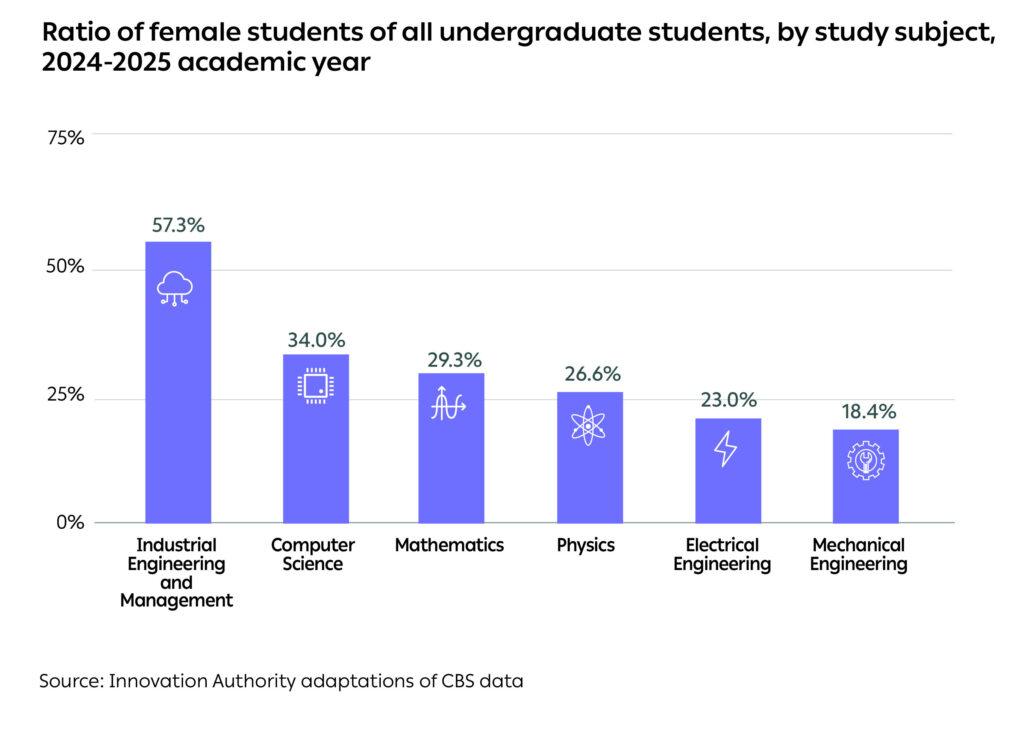
The choice of subjects for expanded matriculation studies in high school has a significant impact on women’s future career paths. In 2024, the number of female students taking the 5-unit computer science matriculation exam reached 4,085 – a figure representing 34.5% of all examinees in this subject that year.
In practice, there has been almost no significant change in the ratio of female students taking the 5-unit computer science exam since 2017, even though their absolute number increased by approximately 40% during this period. Most of this increase occurred up to 2021, with the number of female examinees each year remaining relatively stable since.
Similar Participation in 5-Unit Mathematics Matriculation Exams – But Significant Gaps in 5-Unit Computer Science
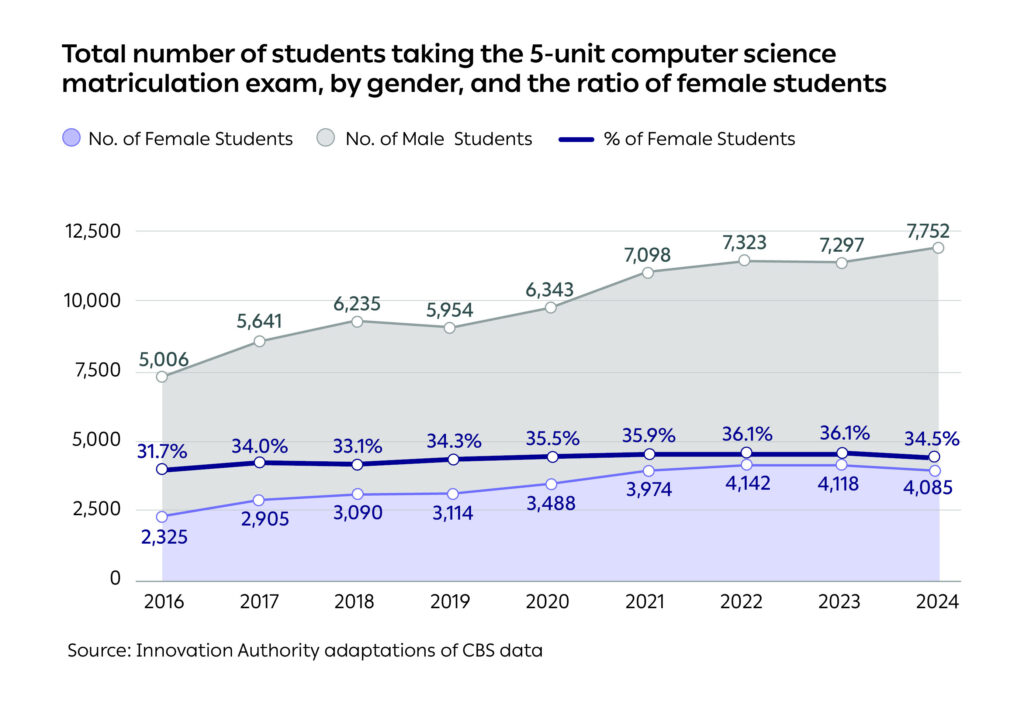
Data on mathematics and computer science examinees reveals a gender gap in students’ subject choices. Participation in the 5-unit mathematics matriculation exam continues to show near parity in both the numbers and the ratio of male and female examinees. In 2024, 9,984 female students took the 5-unit mathematics exam, representing 48% of all examinees that year, while approximately 10,800 male students took the exam, accounting for 52% of examinees.
Although students who take the 5-unit mathematics exam generally have the capability to also take the 5-unit computer science exam, the ratio of male students who choose to do so (72%) is substantially higher than that of female students (41%).
16% of Male Students in the Jewish Education System Take the 5-Unit Computer Science Exam – A Rate 2.5 Times Higher Than Among Female Students in the Jewish and Arab Education Systems
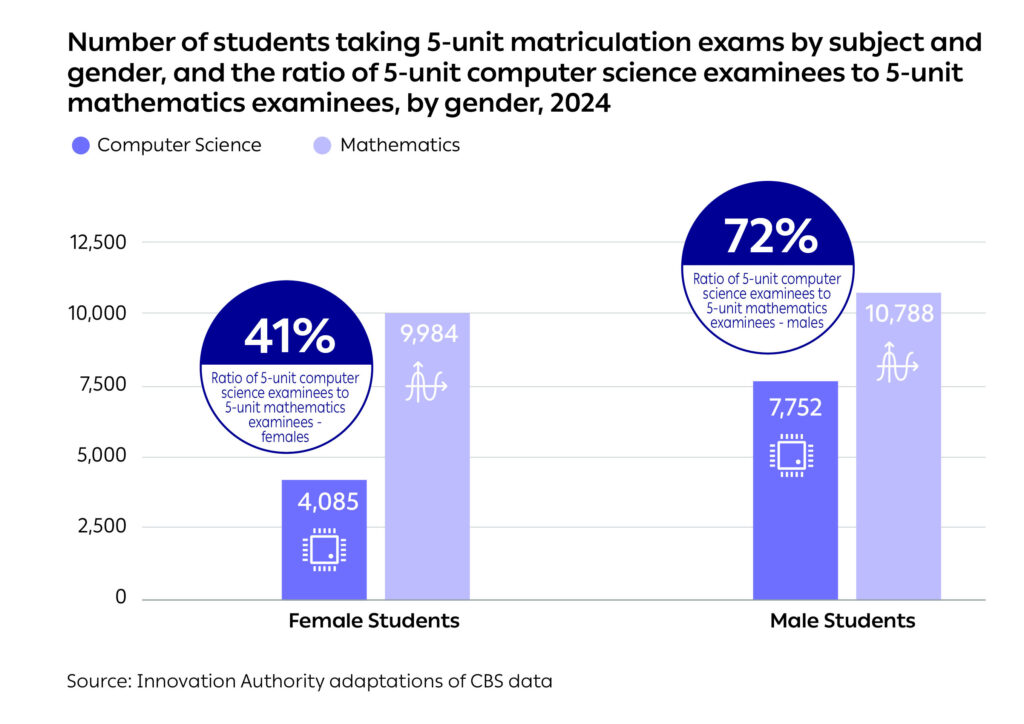
6.6% of female matriculation examinees in the Jewish education system and 6% of female examinees in the Arab education system took the 5-unit computer science matriculation exam in 2024. Among male students in the Jewish education system, the ratio of those taking the 5-unit computer science exam was 2.5 times higher than that of female students, reaching 16.4%. The ratio of male examinees taking the 5-unit computer science exam among all matriculation examinees in the Arab education system was similar to the ratio of female examinees in both the Jewish and Arab education systems. In other words, both gender and sectoral gaps are already evident at the high school level.
Mathematics, however, presents a different picture. In the Jewish education system, the ratio of students taking the 5-unit mathematics matriculation exam in each cohort is higher than in the Arab education system, although gender gaps persist. In 2024, 16.7% of female matriculation examinees took the 5-unit mathematics exam, compared with 22.9% of male examinees. In other words, a higher ratio of male students took the exam. In the Arab education system however, 12.5% of female matriculation examinees took the 5-unit mathematics exam – a ratio lower than that among female students in the Jewish education system, but higher than the ratio among male examinees in the Arab education system, of whom only 9.3% took the 5-unit mathematics exam.
Academia:
Approximately 34% of Students in High-Tech Subjects Are Women
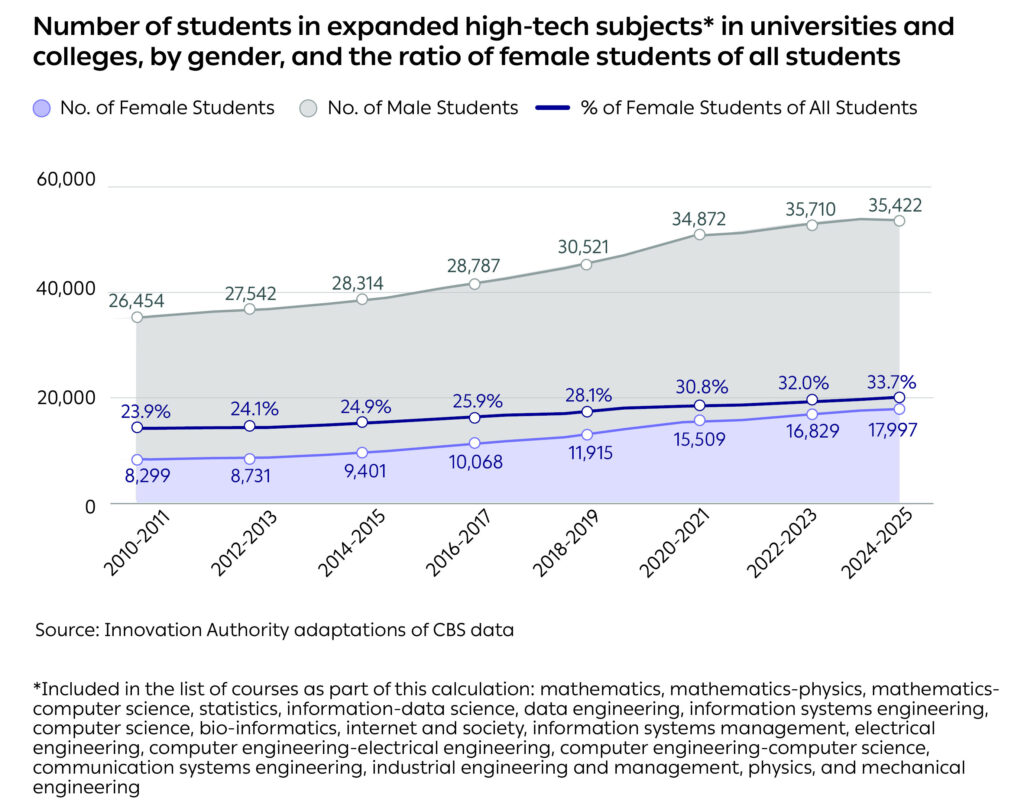
The slow growth in the ratio of women in academic high-tech study subjects continues. In the 2024-2025 academic year, the ratio of female students in high-tech subjects at universities and academic colleges stood at 33.7%. In total, approximately 18,000 female students studied high-tech subjects that year, compared with about 35,400 male students.
In each academic year since 2010-2011, the growth rate in the number of female students studying high-tech subjects has been higher than the growth rate among male students. Overall, between the 2010-2011 and 2024-2025 academic years, the number of female students in high-tech subjects increased by 116%, compared with a 33% increase in the number of male students. Although these figures indicate an accelerated entry of women into the high-tech field, the field remains far from gender parity as the growth rate in the number of male students also remains high.
From a broader perspective, since the 2020-2021 academic year, a downturn can be observed in the growth rate of both male and female students in high-tech subjects, reflecting a return to the rate that characterized the period prior to the accelerated expansion of the sector and related study courses in the middle of the previous decade.
Computer Science Is the Largest and Fastest Growing Study Subject for Female Undergraduate Students
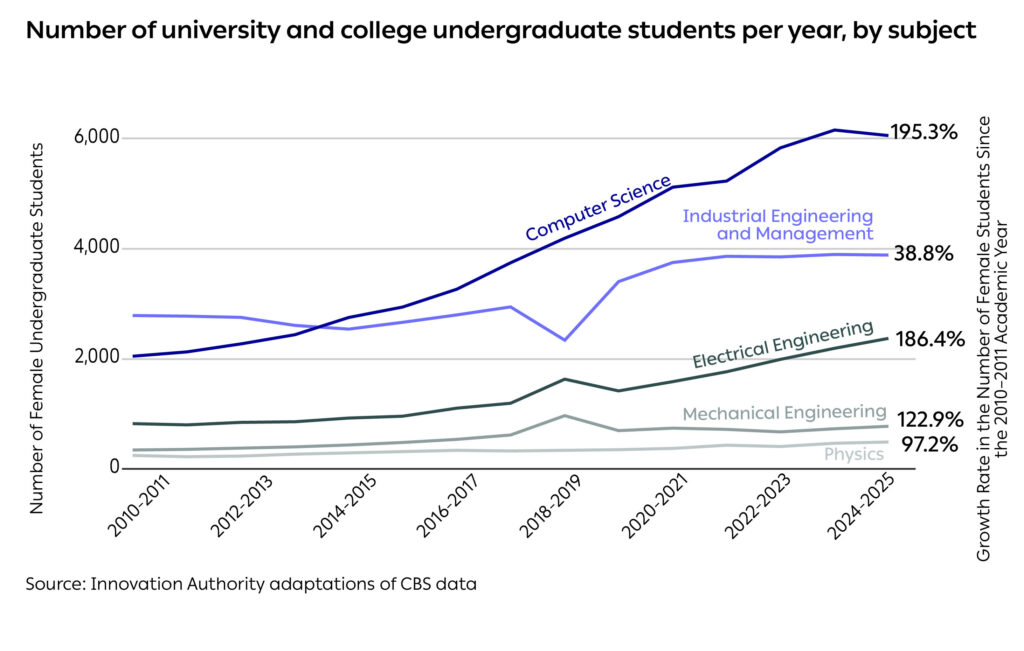
Between the 2010-2011 and 2024-2025 academic years, the number of female undergraduate students in computer science at universities and academic colleges tripled, reaching approximately 6,000. Within a decade, the subject’s size surpassed industrial engineering and management, as well as other high-tech fields.
Significant growth was also recorded in additional fields during this period. For example, in industrial engineering and management, the number of female students increased by about 40%, reaching nearly 4,000 in the 2024- 2025 academic year. During the same period, a consistent rise was also observed in the number of female students studying electrical engineering, where the number nearly doubled to approximately 2,400.
In contrast, there was no significant change in the number of female students in mathematics or physics throughout the examined period, which remained at approximately 500 students in each subject in the 2024-2025 academic year.
57% of Industrial Engineering and Management Students Are Women; Less Than 20% in Mechanical Engineering
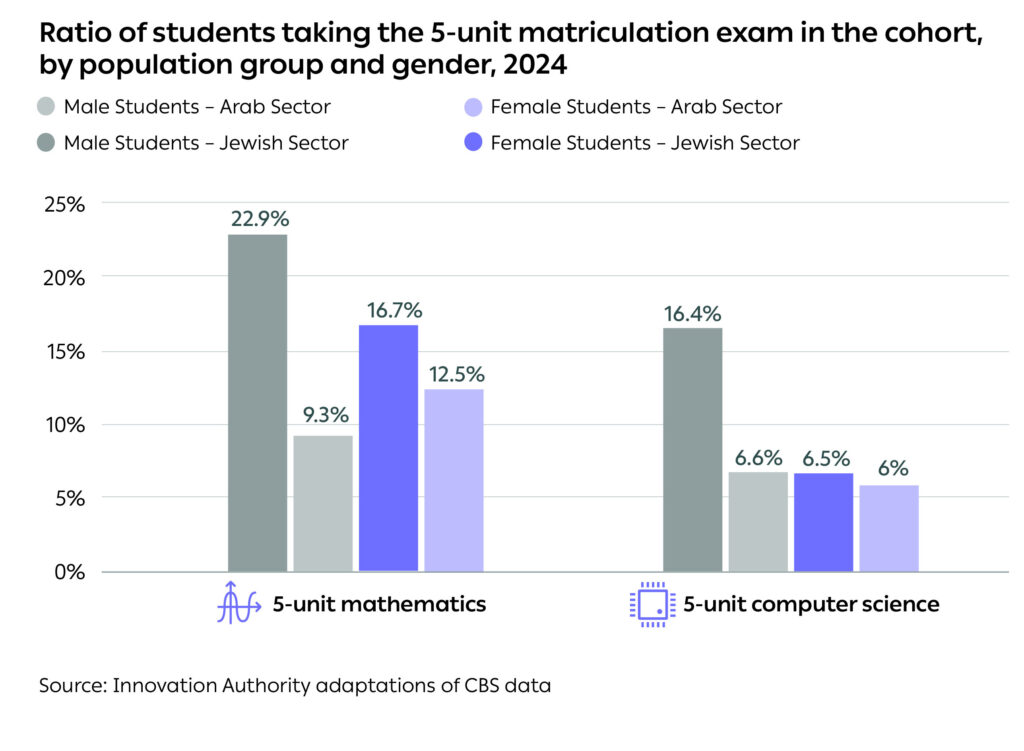
The data indicates variance in women’s representation across study subjects that may lead to subsequent employment in high-tech companies. In computer science – the largest hightech field in terms of the number of female students – women accounted for 34% of students in the 2024-2025 academic year. The field with the highest representation of women is industrial engineering and management, where female students comprised approximately 57% of all students.
In contrast, the ratio of women is lower in engineering fields, accounting for about 18% of undergraduate students in mechanical engineering and 23% in electrical engineering.
An examination of women’s representation in these subjects over time shows that in most of the disciplines examined (with the exception of mathematics), the ratio of female students has increased. However, this growth has been gradual. In computer science, the ratio of female students rose from 26.8% in 2010-2011 to 34% in 2024-2025. In electrical engineering, the ratio increased from approximately 11% to 23%, and in mechanical engineering from about 8% to 18%. In industrial engineering and management, the ratio of female students rose by about 15 percent, from 42.6% to 57.3%.