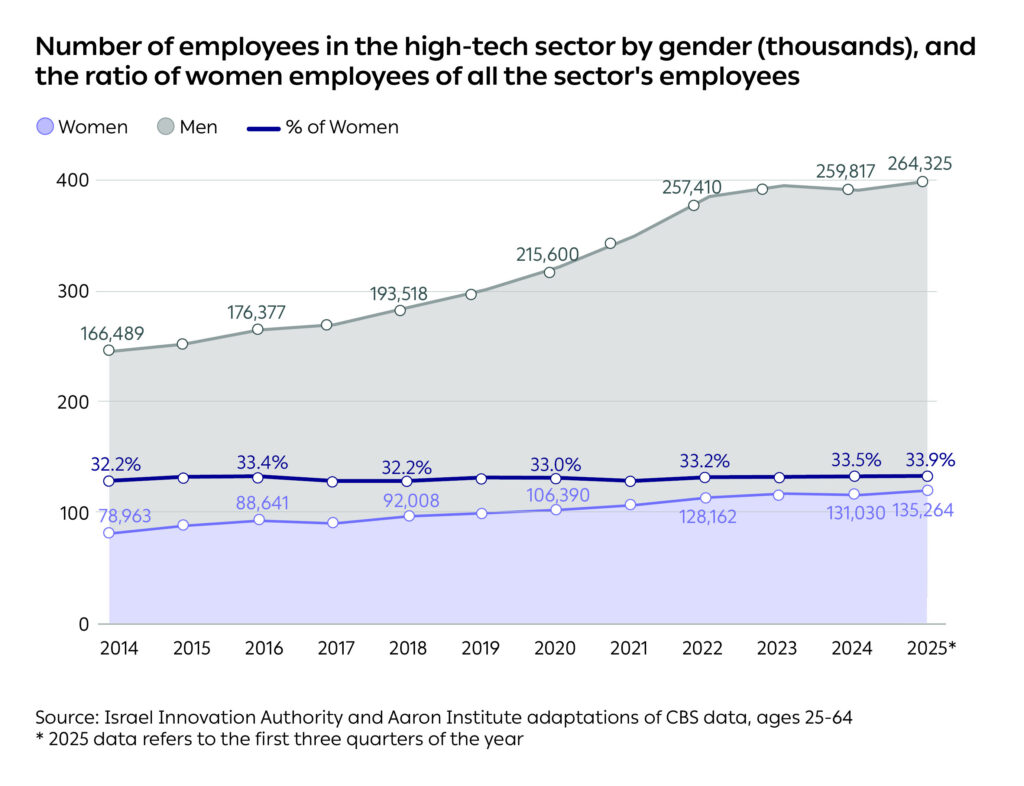
Approximately 34% of High-Tech Employees Are Women
Approximately 135,000 women were employed in the high-tech sector in 20251Data refers to the first three quarters of the year – an increase of 3.2% compared with 2024. Women account for 33.9% of employees in the high-tech sector – a ratio that has remained largely unchanged over the past three decades.
Over the past decade, the growth rate in the number of women employed in high-tech has been only slightly higher than that of men. Between 2015-2025, the number of women employed in the sector increased by about 61%, while the number of men increased by 57.2%. As a result, no significant change has been recorded in women’s representation in the sector.
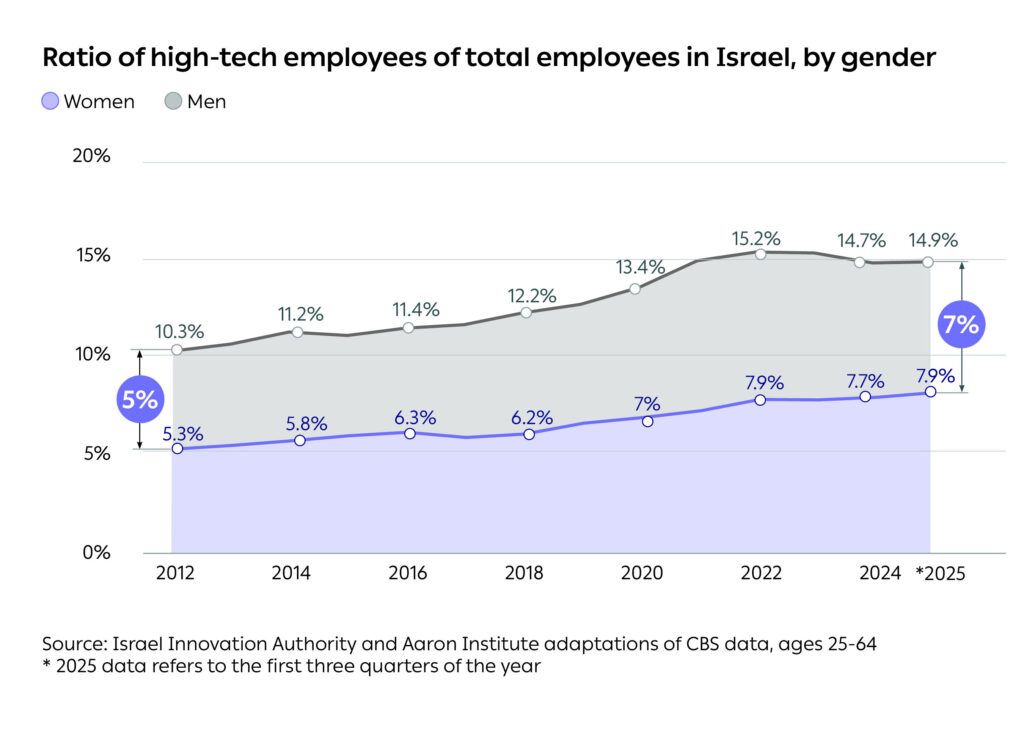
Approximately 8% of Women in Israel Are Employed in High-Tech – About Half the Ratio Among Men
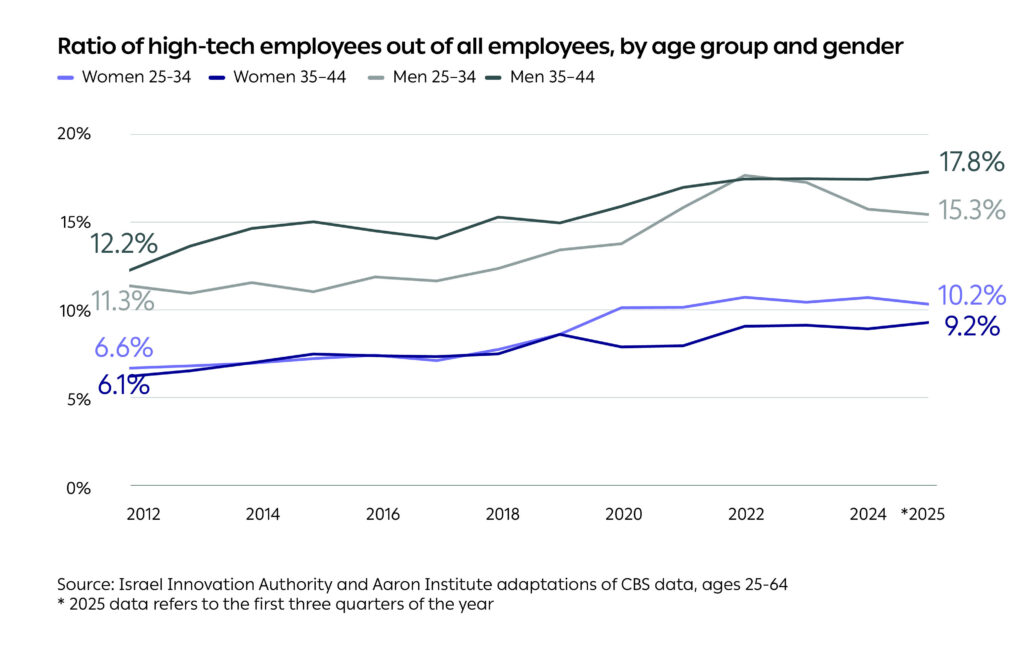
Employment in Israel’s high-tech sector has increased over recent years, with the ratio of high-tech employees out of total employees in Israel rising to 11.4% as of 2025.2Data refers to the first three quarters of the year An examination of the trend shows similar rates of high-tech employment growth among both women and men.
However, during the examined period, the gap between the ratio of women employed in high-tech and the ratio of men widened. In 2012, the ratio of women employed in high-tech out of all women employees in Israel stood at 5.3%, while the corresponding ratio among men was 10.3% i.e., a gap of approximately 5%. By 2025, this gap had increased, with the ratio of women employed in high-tech reaching 7.9% and the ratio among men standing at 14.9%, raising the gap to about 7%.
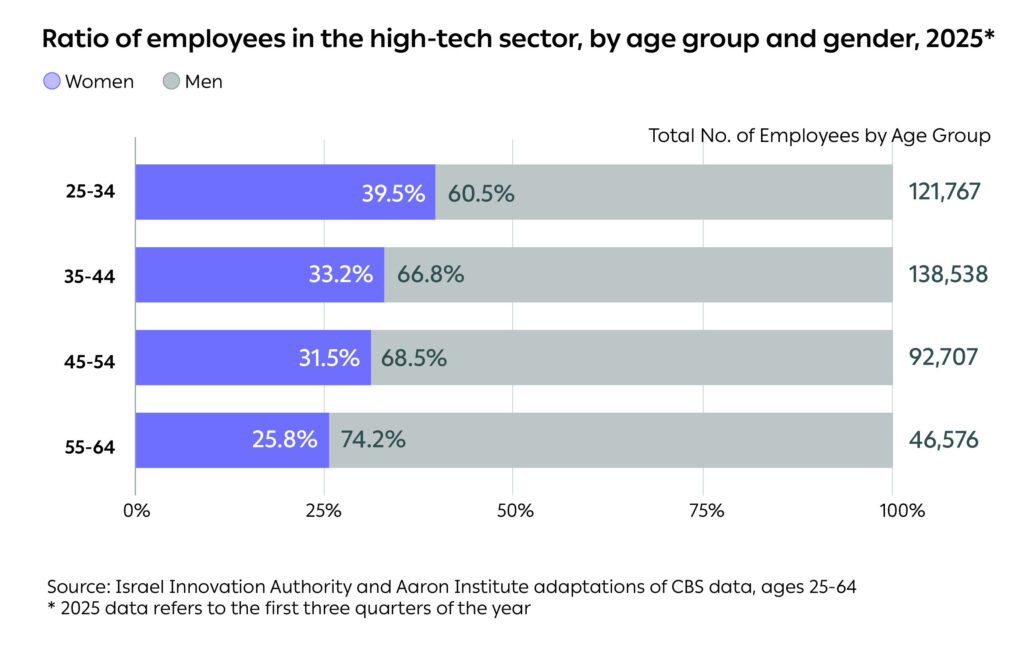
The Highest Ratio of Women Employed in High-Tech is in the 25-34 Age Group
The data indicates a variance in women’s representation in the high-tech sector across age groups. In the youngest age group (25-34), the ratio of women out of all high-tech employees is higher than in other age groups across all examined years and has increased over the period under examination.
In 2025, women aged 25-34 accounted for 39.5% of all hightech employees in this age group, up from 34.9% in 2012.3Data for 2025 refers to the first three quarters of the year For more than a decade, the ratio of women among all employees in this age group has been higher than that in older age groups. Nevertheless, this increase has not significantly changed the overall employment composition of the sector.
In most of the other age groups examined, the ratio of women out of all employees in each age group also increased during this period, though to a lesser extent. As of 2025, women accounted for 33.2% of high-tech employees in the 35-44 age group and 31.5% in the 45-54 age group. The lowest ratio was recorded in the 55-64 age group, where less than 26% of employees were women.
Women’s Employment in High-Tech Is Higher in Younger Age Groups
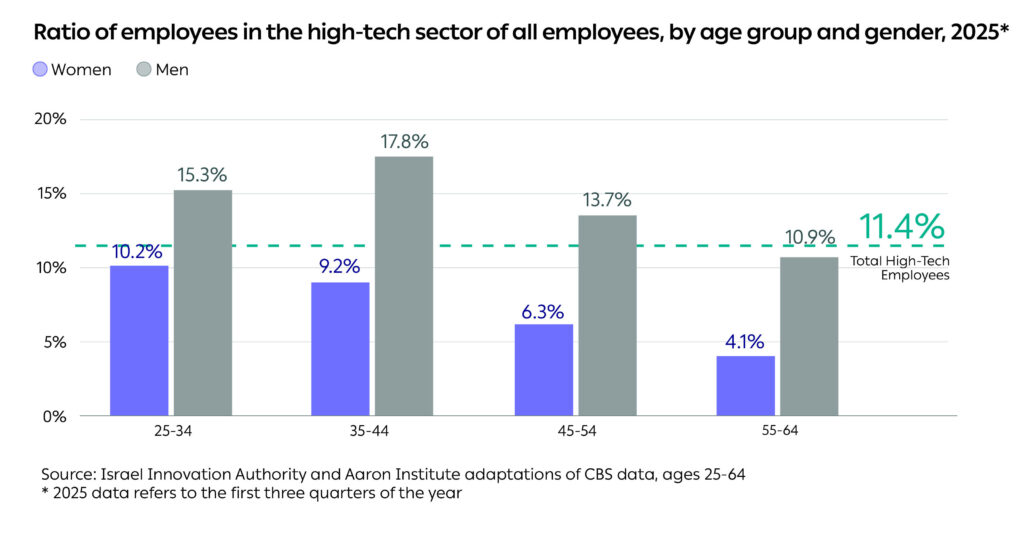
The highest ratio of women employed in high-tech was recorded in the youngest age group with 10.2% of all employed women aged 25-34 working in the high-tech sector in 2025.4Data refers to the first three quarters of the year In subsequent age groups, the ratio of women employed in high-tech out of all women employees declines steadily: 9.2% among women aged 35-44, 6.3% among those aged 45-54, and 4.1% in the oldest age group, 55-64.
In every age group, the ratio of men employed in high-tech is higher than that of women. The highest ratio of men employed in high-tech is in the 35-44 age group, where 17.8% of all male employees work in the sector.
At the same time, the ratio between the level of women and the level of men employed in high-tech in each age group is higher in younger age groups, indicating smaller gender gaps among younger cohorts.
At the same time, over the past decade, the ratio of women employed in high-tech out of all women employees increased across all age groups. For example, in 2015 the ratio of women employed in high-tech among those aged 25- 34 stood at 7.2%, rising a decade later to 10.2%. A more moderate increase was observed in the other age groups.
Most of the Growth in High-Tech Employment Is in R&D Roles, Where Women Comprise About 28% of Employees
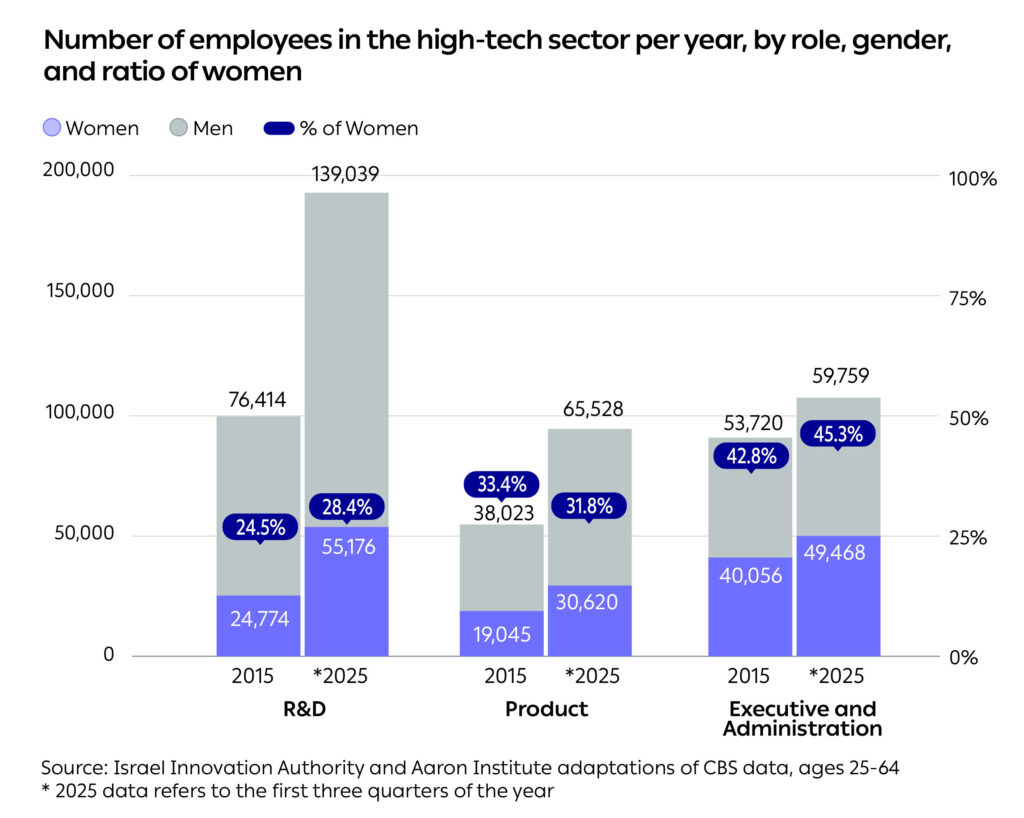
As presented in previous Innovation Authority publications, most of the growth in high-tech sector employment over recent years has occurred in R&D roles.5The roles are according to those defined by the Follow-Up Committee to the Perlmutter Committee In 2025, approximately 55,000 women were employed in R&D roles in high-tech, eventually reaching a ratio of 28.4% of all employees in high-tech R&D roles.6Data refers to the first three quarters of the year A decade earlier, in 2015, about 25,000 women were employed in high-tech R&D roles, meaning their number more than doubled, while their ratio of R&D employees stood at 24.5%.
In product and executive and administrative roles in high-tech, the growth rate in the number of women employed has been slower. Approximately 30,600 women were employed in product roles in 2025, accounting for 31.8% of all employees in these roles – a ratio similar to that observed throughout most of the past decade.
In executive and administrative roles in high-tech (including marketing, human resources, and other functions), the share of women increased over the past decade from 42.8% in 2015 to 45.3% in 2025, however, their number rose during this period by only 9,000.
The Ratio of Female Programmers and Development Managers Has Remained Largely Unchanged Over the Past Decade
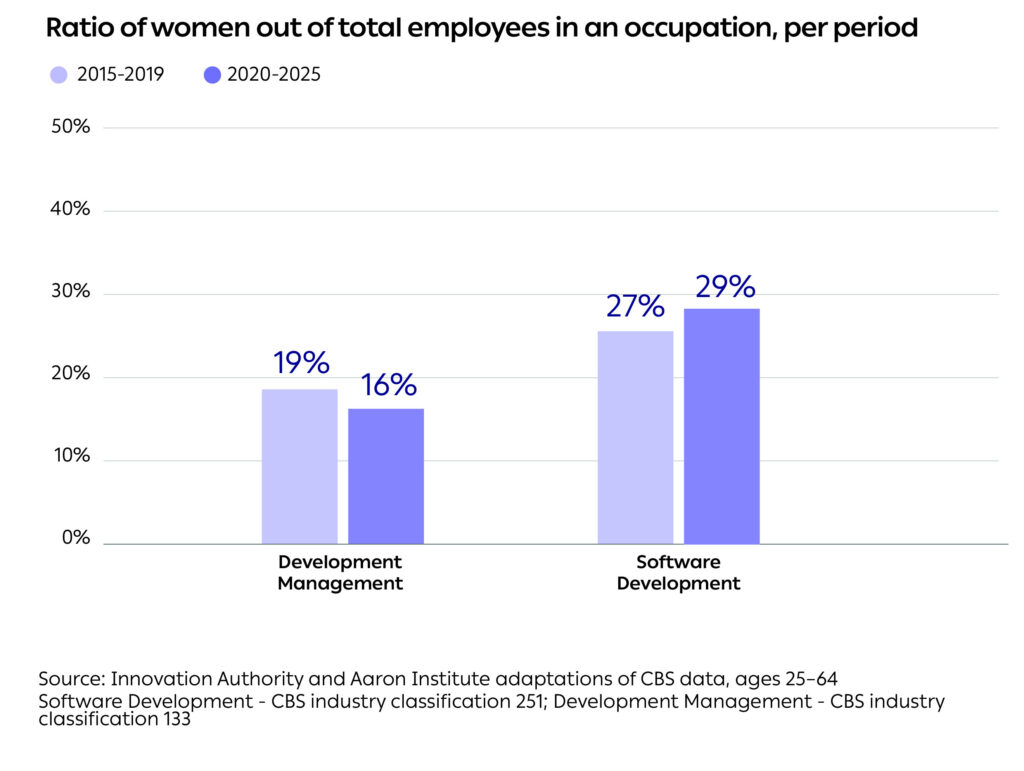
A study of occupations included in R&D professions in the high-tech sector reveals that the ratio of women has changed very little over the past decade. During 2020-2025, women accounted for 29% of all employees in development roles.8 This ratio stood at 27% between 2015-2019.
The ratio of women in R&D roles at managerial level is even lower and appears to have declined slightly over the past decade. Between 2020-2025, women accounted for an average of only 16% of all employees in managerial development roles – down from an average of 19% in the preceding five-year period (2015-2019).9
Startups:
Women Lead Approximately 11% of Startups Founded in the Past Decade
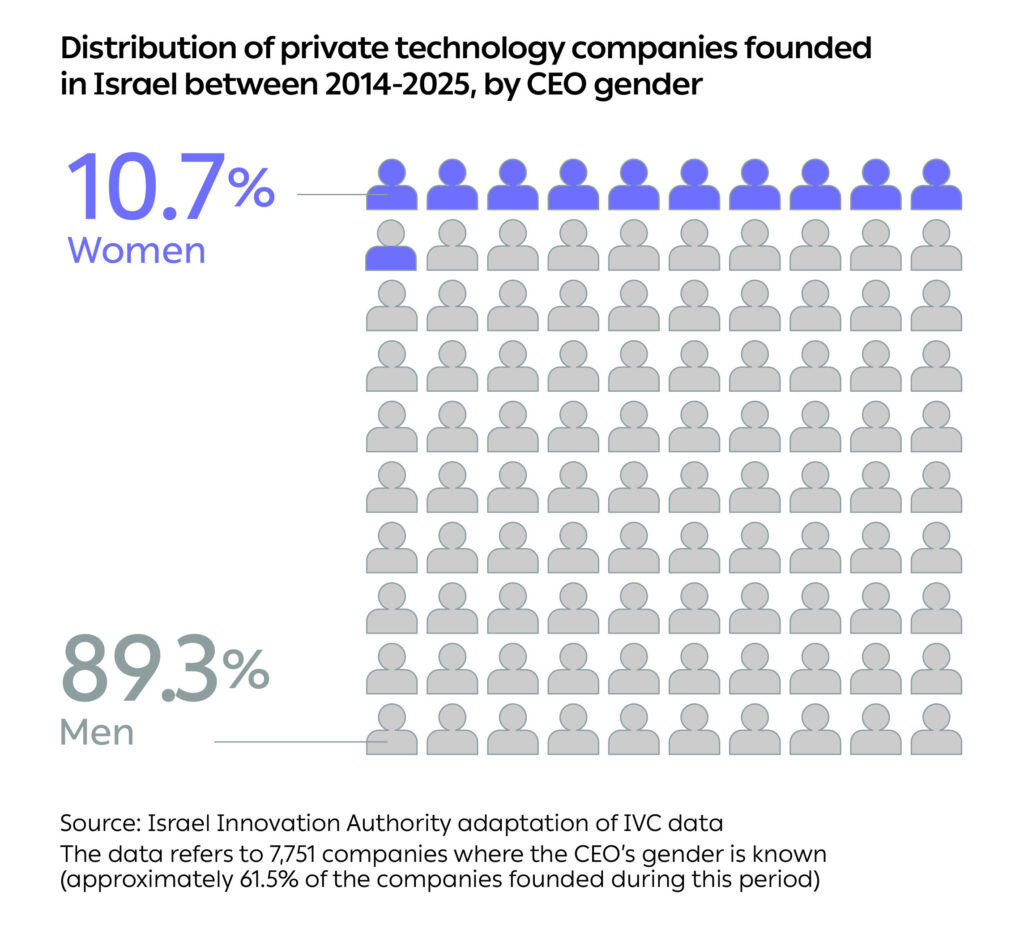
Significant gaps persist in startup leadership and startups’ fundraising – with no substantial change compared to previous publications on the subject. Women lead 10.7% of technology companies founded in Israel between 2014-2025 i.e., one of every ten startups are led by a female CEO.
After a multi-year trend of gradual growth in the ratio of female CEOs heading technology companies, a decline was registered during 2025 in the ratio of female CEOs leading companies founded that year. However, these figures are expected to be updated as additional information becomes available on companies established in 2025 (due to late detection of new companies), thereby clarifying whether this reflects an actual change in trend.
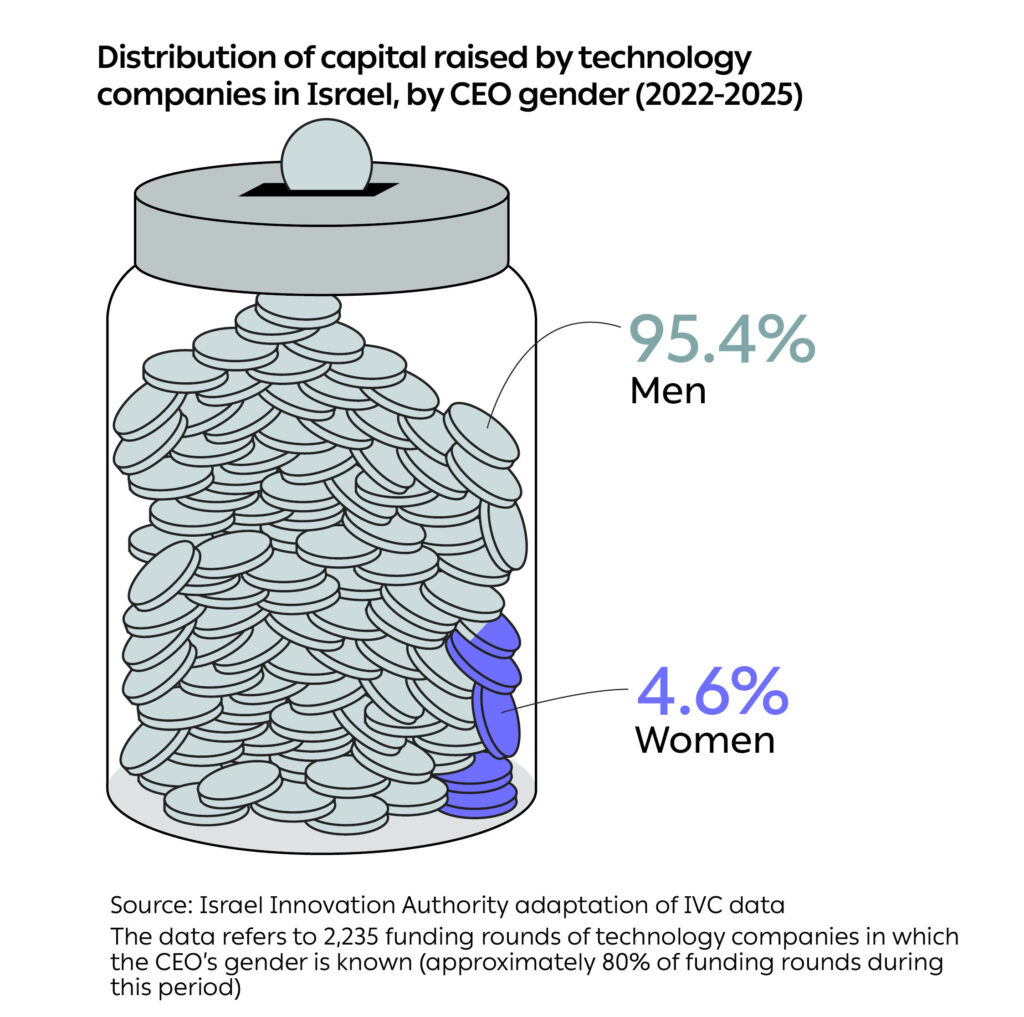
Female CEOs Have Raised 4.6% of Total Startup Capital in Recent Years
Approximately 8% of funding rounds in 2022–2025 were conducted by startups led by female CEOs (out of rounds for which the CEO’s gender is known).
In fundraising terms however, technology companies led by women raised 4.6% of the total capital invested between 2022-2025.
In other words, companies led by female CEOs raised less funding on average than those led by male CEOs. Similar findings were reported in the ‘Women in High-Tech’ reports published in 2022 and 2025, indicating no change in the trend. The gap stems from the average amount raised in later-stage funding rounds (USD 50 million and above), where the number and scope of funding rounds led by women tend to be smaller.