In the quantum world, where no country or company can afford to be left behind, Israel is already among the global leaders in both technology development and investment. Despite the low probability that all the technologies will ultimately succeed, capital continues to flow into this field
Nine percent. That is Israel’s share of total global private investment in quantum, despite being a country of only ten million.
For Ran Achituv, Partner at Entrée Capital, one of the world’s leading investors in terms of quantum investments, this almost inconceivable figure comes as no surprise. “Israel is home to all types of quantum computers and every part of the supply chain. Not every country is in this situation, and it’s rare even in the US. From one quantum startup less than a decade ago, Israel now has more than 20 active companies, spanning all relevant technologies and every part of the production chain”. Achituv is not observing this development from the sidelines. Instead, he is one of the people driving it forward.
“I spent two years studying before making my first quantum investment”, he says. “During that time, I developed a premise and have simply been following it ever since”. His first investment was in a company he describes as “quasi-quantum”, while his second was in Classiq, which has raised 65% of all global capital ever raised for quantum software. Today, Entrée Capital holds nine quantum investments in leading companies worldwide, across four main areas: software, hardware, sensing, and communications.
The road there was not always smooth. “I initially rejected some of the companies I invested in several times, until they came back with the right thing. Among them was a company I first met in 2018, and which I only decided to invest in at the third meeting in 2022, when their idea was worthwhile”, he explains.
The question guiding Achituv is not whether the technology is possible, but whether a business and growth can be built around it, and in what time frame. “I have developed a formula that calculates the timing, market, and team”, he explains, “and when it’s relevant, we invest”.
A technological risk always exists, but Achituv looks at the entire portfolio a single company. “The probability that they will all succeed is close to zero, but that does not deter me. In this industry, risk and opportunity exist alongside each other”, he emphasizes.
Achituv believes that understanding the broader landscape is just as important as evaluating individual companies. He closely follows the development of quantum hardware technologies: “Today, the field of trapped-ion technology has proven itself the most successful, with two leading public companies, followed by the fields of neutral atoms, superconductors, and then photons, although the latter two technologies still suffer from unresolved scaling issues”. Beyond these approaches, he speaks about a “third generation” of chip-based computers that will operate at room temperature, without the need for enormous cooling systems that take up large spaces and cost tens of millions to operate.
For investors, researchers, and governments alike, that vision represents one of the industry’s most important long-term goals: making quantum computing not only powerful, but practical and scalable.
The major opportunity Achituv currently sees is taking Israeli companies to the public markets. In his view, the logic is simple: “In a dynamic market where public companies possess capital for acquisitions, you are either the buyer or the bought. It is better to be on the buying side”.
Israel accounts for 9% of global private investment in quantum, largely thanks to the Innovation Authority’s initial investments in companies, yet it currently represents virtually none of the public quantum market. Achituv is working to change that. Two Israeli quantum companies are already in the process of going public under his leadership. Why now? Although the perfect quantum computer does not yet exist, and most commercial applications remain in the future, capital continues to flow freely.
Miriam Shtilman, Partner at Tal Ventures, former advisor to the Minister of Finance in Israel, and Israel’s representative in the European Quantum Community Network, answers the question without hesitation: “Because the risk of not having such a computer is so great”, she says, “that companies and governments cannot afford to take the risk of being left without a quantum computer. That is why so much capital is being directed in this direction”.
To illustrate this, she points to one of the world’s largest quantum funds, owned by the Danish pharmaceutical giant Novo Nordisk. “They simply understand the potential in the world of pharmaceuticals and know that they cannot afford for competitors to get their hands on it. Quantum computing is relevant to pharma, finance, banking, defense, energy, and every field where optimization, molecular simulation, or encryption are on the agenda. No one can afford to come second in a field where the gap between the leader and the rest could become impossible to bridge”, Shtilman emphasizes.
Shtilman also addresses the scale of investment required. “Most of these companies, and especially hardware companies, are extremely capital-intensive. Some of them raise tens of millions as an initial investment”. As an example, she refers to an Israeli company located above a café in Binyamina that, with private capital, established one of only three fabrication facilities in the world for developing a quantum computer based on diamonds and heads the Diamond-Based Semiconductor Components consortium of the Innovation Authority and the Directorate of Defense Research and Development. “There are three such fabs (fabrication plants) in the world, and one of them was built here”, she says.
“Israel’s strength in the quantum field stems from a combination of scientific depth, engineering capability, and entrepreneurship that is prepared to take a risk. The Innovation Authority’s role is to connect them all and let them work together at a pace and scale that would otherwise have been impossible”.
Dr. Alon Stopel, Chairman of the Innovation Authority
Between Academia and Industry
Private capital did not materialize on its own. Behind the Israeli ecosystem stands a national program that laid the groundwork through government investment, connecting academia with industry and encouraging technologies to move from the laboratory into the marketplace. The result is evident today. Nearly all quantum companies active in Israel evolved from university research, and many continue to maintain close ties with academia even after becoming independent companies.
This connection between research and industry, which in more mature fields tends to weaken over time, is preserved in quantum because the field is still in its early stages. The most significant innovations still come from laboratories, and the companies that succeed are those that know how to translate research into the market without sacrificing scientific rigor. At this stage, the real competition among companies is not solely about technology. It is also about talent.
Specifically, competition for the relatively small group of individuals who understand both advanced physics and product development – the people capable of bridging the gap between scientific discovery and commercial execution. The next challenge is to expand the talent base. Shtilman emphasizes the importance of starting early: “Investment in high school physics education is critical to ensure that we achieve our objective. Quantum is mainly about physics. Even software companies in the field need people who understand physical principles, and those people need to be cultivated long before they reach university”.
At the same time, the Innovation Authority continues to serve as the first entity when the risk level is too high for the private market, connecting companies to funding sources, young entrepreneurs to support programs, and the Israeli ecosystem to the international arena. In a field where the global race is intensifying, this presence is considered one of Israel’s structural advantages and the foundation on which the rest of the activity is built.
Israel’s Unique Asset
Qubit Israel, a non-profit organization dedicated to advancing Israel’s quantum ecosystem, also works to connect the sector’s many stakeholders: investors, academic institutions, companies, and government bodies. The association’s CEO, Tami Mazel Shachar, describes it as a “shared home” for all the players active in the field: the Innovation Authority, the Directorate of Defense, Research & Development, the Planning and Budgeting Committee, academia, and industry. “Everyone operates from a different angle, and together this should generate tremendous strength”, she says.
The association grew out of a community established in 2018 as a WhatsApp group for people interested in the quantum field who lacked a forum in which to connect. The community, which grew organically, now includes more than 2,000 members and hosts lively, productive discussions among CEOs of quantum companies, government officials, first-year students, and young programmers.
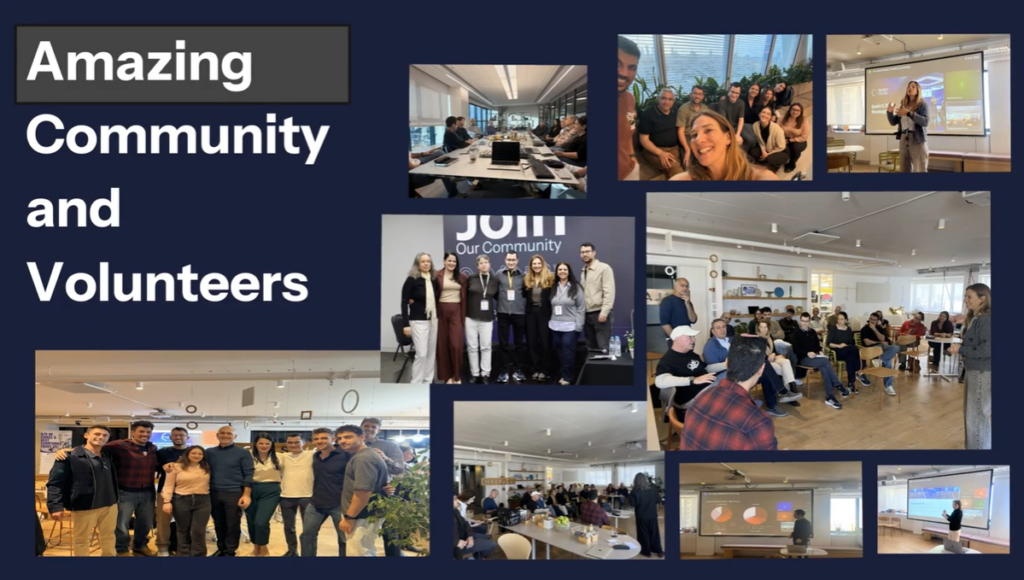
Today, Qubit IL focuses on something beyond a mere community. Mazel Shachar defines two main areas of activity. The first is preparing the Israeli market: training high school students, executives at large companies, and existing developers intimidated by quantum languages.
“Our message to today’s youth is: ‘Don’t just study computer science. By the time you finish your military service, quantum will already be here”, says Mazel Shachar. At the same time, the association works with large companies across sectors such as pharma, banking, and industry, offering training for management teams. “We encourage them to come and learn what is happening in the quantum world – about quantum computing, quantum communication, quantum sensing, and what they should already be doing now”, she explains.
There is another population that Mazel Shachar speaks about with warmth: the developers. “Israel is full of wonderful developers, but quantum languages scare them, and they fear they have no chance of building a career in the field”. Not every quantum company is a hardware company that requires physicists. Companies also need regular developers. “They only need to become familiar with the language and the terminology. That’s what we provide”.
The second area Qubit IL focuses on is international exposure. This entails building connections with parallel organizations in the United States, the UK, and across Europe, working with economic attachés and embassies, and ensuring that the portfolio of Israeli companies has a global presence, especially when Israel is excluded from international initiatives for political reasons.
The big dream is to organize the world’s largest quantum conference in Israel, so that the global industry comes here too. In the meantime, the goal is to ensure that those who do arrive in Israel leave with a clear picture of what is being built here. “We have a tremendous asset. And above all, we have initiative, hunger, and competitiveness”, says Mazel Shachar.
Behind it all stands a vision, as Mazel Shachar puts it: “The quantum race is like the nuclear race. There is a global arms race, and it is a strategic necessity for the State of Israel to be at its forefront”. Indeed, the US Congress has already adopted a decision equating the importance of quantum with that of nuclear capability in the supply chain and restricting the purchase of components for building a quantum computer. According to her, this worries startup CEOs in Israel: “As long as they are building small things, that is fine. But a problem will arise when they need larger quantities and are blocked from purchasing the necessary components. Israel must therefore not only be at the technological forefront but also ensure the resilience of its supply chain and maintain bilateral agreements with the leading countries”.
Where will Israel be in five years? According to Shtilman: “one of the world’s top five in the field of quantum, and a power that cannot be excluded from collaboration agreements”. She attributes that future to several factors: increased government investment, stronger cooperation between the Ministry of Economy and Industry and the Ministry of Foreign Affairs, and a broader base of people with a deep understanding of physics.. But above all, she points to a culture. The kind that led companies such as Check Point and CyberArk to enter the field as pioneers, to persevere, and to succeed on a large scale.
Achituv shares this view. “What distinguishes the Israeli industry is a relatively small number of people who are promoting this forward with extraordinary intensity. The same thing happened with cyber. It won’t happen by chance. Rather, thanks to people who will make things happen”.
“Investment in deep-tech is not a short-term gamble, but rather, a choice to build deep capabilities over time. In fields such as quantum, investors who are prepared to invest early, even when faced with high uncertainty, are those who create an advantage for themselves when the market matures”.
Dror Bin, CEO of the Innovation Authority