
From a precision of billionths of a second in deep space to navigation systems resilient to GPS disruption, the path from atomic clocks to cold-atom sensors is shaping Israel’s race in the field of quantum sensing
For most of us, time is an abstract concept measured in hours and minutes. For Benny Levy, AccuBeat’s CEO, time is a physical resource that can be measured with nanosecond accuracy, i.e., in billionths of a second. Such clocks form the infrastructure for virtually every modern technological system.
AccuBeat was founded in 1993 by Benny Levy and physicist Dr. Avinoam Stern. Since then, the company has established itself as one of the world’s leading developers and manufacturers of precision timing and frequency solutions. AccuBeat develops quantum sensors based on atomic clocks, in which the clock itself serves as the sensor. Instead of measuring properties, such as temperature or weight, it measures time and frequency with extreme precision, allowing highly accurate conclusions about positioning, movement, and other physical phenomena.
“Once different types of atomic clocks are successfully developed, one of the major challenges is taking something that works in the lab and turning it into a product that functions reliably in the real world, such as in fighter jets, helicopters, UAVs, submarines, ships, civilian environments, homeland security systems, and others”, Levy explains. “The problem is not only engineering. It is deeply physical”, he emphasizes. “To produce a sensor like this, it’s not enough to simply ‘build a product’. You need to control quantum phenomena, materials, and delicate interactions between light, atoms, and frequencies. That is why the field is progressing relatively slowly, but also why those who succeed gain a real advantage”.
According to Levy, the ultimate goal is technological independence in the fields of time and frequency. A country that fails to control its own precision infrastructure remains dependent on others and is, as a result, vulnerable. The quantum sensor is not merely a measurement device but also a means to overcome dependence on unreliable external systems, primarily GPS. As is well known, such external systems rely on signals transmitted from space and are vulnerable to both jamming and spoofing attacks. Once independent, highly precise time measuring is provided by a self-contained atomic clock; navigation, positioning, and synchronization systems that can operate even when hostile elements disrupt or falsify external signals. At AccuBeat, this challenge is addressed through the atomic clock itself. The quantum component at the heart of every system the company develops, manufactures, and supplies to customers in Israel and around the world for civilian, military, and space-related applications.
The atomic clock, the first practical application of quantum theory, introduced in Israel by AccuBeat in the 1990s, has become a critical component of infrastructure for secure communications systems, SIGINT intelligence systems, advanced navigation platforms, command-and-control systems, sophisticated radar technologies, and more. Atomic clocks are intended for use by defense organizations, including the Israel Defense Forces, the Israeli Air Force, and defense industries in Israel and abroad. As well as other entities where they play a central role in civilian and homeland security (HLS) applications, including cellular and wired communications, power grids, navigation systems, banking infrastructure, transportation, oil and gas exploration, data centers, and more.
The clock’s precision is based on energy transitions in the rubidium atom, which is converted into an extremely accurate frequency reference. This enables synchronization between different sensors in the field down to the nanosecond level (billionths of a second), a degree of precision without which these systems could not function.
One of the atomic clocks developed by the Israeli company AccuBeat is a special model supplied to the European Space Agency for use in the Galileo satellite navigation system, Europe’s counterpart to the American GPS. In addition, AccuBeat developed a highly environmentally resilient atomic clock for the United States Air Force and an Ultra Stable Oscillator (USO), which is currently installed aboard the European Space Agency’s Jupiter Icy Moons Explorer (JUICE). The spacecraft, that was launched roughly two and a half years ago, is now navigating toward Jupiter’s moons as part of an experiment led by the Weizmann Institute of Science and the Sapienza University of Rome. This clock reaches E-14 stability and has been described by the clients as the world’s most stable clock for deep-space missions.

The Most Precise Sensor in the World
Levy explains the physical principle behind the atomic clock through the structure of the atom. Electrons circle the nucleus in defined energy levels (orbitals). By applying energy, an electron can transition from one energy level to another. When the electron returns to its original orbital, it emits electromagnetic radiation at a stable, highly precise frequency that serves as a reference point against which the clock’s crystal oscillator is continuously calibrated. The oscillator effectively “locks” onto the atoms to maintain maximum precision. In this way, an abstract quantum physical phenomenon is transformed into a practical time-measurement tool with a resolution of billionths of a second. Just as importantly, the clock maintains that precision over long periods, enabling systems to operate without GPS.
An atomic clock is, first and foremost, a frequency sensor, a device that measures time with extreme nanosecond-level precision, but it is more than a measuring instrument. In defense applications, the atomic clock acts as the synchronizing element between multiple sensors, radar, intelligence systems, and communications networks, enabling them to operate together as a unified system. The key difference between a conventional sensor and AccuBeat’s system-level approach is that the sensor not only functions independently, but as part of a distributed network of quantum sensors that together generate an entirely new operational picture with significantly greater value.
For example, when locating targets, several sensors distributed across a given area measure the arrival time of a signal. The tiny differences between those arrival times are used to solve a set of equations that leads to highly accurate positioning. This synchronization is also essential for secure communications, locating electromagnetic transmission sources such as radar and communications systems, and the reliable operation of civilian infrastructure.
Building such a clock requires the integration of 14-16 technological disciplines, ranging from quantum physics and thermodynamics via vacuum and microwave systems, to software engineering, hardware, and mechanical ruggedization.
“We take atoms such as rubidium or cesium, which behave stably and predictably at the quantum level, place them inside a vacuum-sealed glass chamber, and project light through them”, Levy explains. “When the frequency we apply is precise, the atoms absorb the maximum amount of light, and the clock stabilizes, around the exact frequency of the atom and uses it as a constant reference for measuring time”.
Precision lies at the heart of quantum sensing: the more accurately time can be measured, the more accurately information about the world can be inferred. AccuBeat uses this principle to enable complex measurements, such as precise positioning based on tiny time differences between signals, synchronization of distributed systems, and detection of physical changes through their influence on frequency. To put it simply, the sensor does not “see” the world directly but rather, measures time with such extraordinary precision that time itself becomes a proxy for position, movement, and other physical phenomena.
“The advantage of quantum sensors is their ability to create technological independence in critical systems. That is why we invest not only in infrastructure, but also in connecting research, industry, and real-world applications”.
Alon Stopel, Chairman of the Innovation Authority
Applications: Secure Communications and Civilian Infrastructure
One of the technology’s central applications, including in the intelligence world, is communications resilience. The concept involves deploying synchronized sensors capable of locating radiation sources, such as radar systems or communications devices within a few meters by solving equations of motion in arrival times, even when the GPS signal disappears or is spoofed. Levy also warns about the growing threat of GPS spoofing. In such attacks, a hostile entity broadcasts fake signals that can divert aircraft, ships, or autonomous vehicles from their intended routes. AccuBeat’s clocks are protected against such attempts and can also alert users when spoofing is detected.
The need for quantum-level precision is also permeating critical civilian infrastructure. In electrical grids, generators must operate precisely in the same phase to prevent “destructive interference” that could damage entire systems. In many countries, synchronization relies on GPS, but Israel’s heightened awareness of jamming and spoofing threats is prompting the use of atomic clocks instead. Similar applications exist in banking (where timestamping is required for millions of financial transactions per second), in oil and gas exploration (for measuring time distortions in reflected underground waves), and in cellular communication networks.
The Second Quantum Revolution
At the advanced development stage, AccuBeat is pushing the boundaries of quantum sensing by improving the stability and precision of the atoms themselves. “The company is presently driving ‘the second quantum revolution'”, Levy claims. “The current flagship project is the development of a cold-atom clock that sounds almost like science fiction: slowing atoms to temperatures approaching absolute zero, minus 273 degrees Celsius. As the temperature rises, atoms move more chaotically, reducing measurement precision. In this technology, laser beams are used to “slow down” atomic motion, bringing the atoms to temperatures extremely close to absolute zero. At this point, the atom’s energy levels become dramatically more stable, the atom is almost frozen in place, and measurements become hundreds to thousands of times more accurate. The result is a new generation of sensors capable of operating for long periods without relying on external systems such as GPS, and the possibility to develop new applications in navigation, cybersecurity, space technologies, autonomous systems, data centers, and others.
Another major axis of development is minimizing size, weight, and power consumption. Where atomic clocks once required an entire room, AccuBeat is already producing clocks the size of a matchbox. The next goal is a component measuring just 13×13×13 millimeters. “In space systems, UAVs, and sensitive defense applications, every gram and every milliwatt matter”, Levy explains. “The engineering challenge is to take a quantum laboratory that once filled an entire room in a research institute and compress it into a rugged component capable of surviving the vibrations of a missile launch or extreme temperatures, while still preserving quantum-level precision. Such miniaturized clocks will enable future applications in miniature satellites and drones”.
The Innovation Authority: From the First Grant to the Quantum Frontier
“At the beginning of our journey, 30 years ago, we received an R&D grant from what was then the Office of the Chief Scientist to develop the prototype of the first Israeli atomic clock”, Levy recalls. Since then, the relationship with the Innovation Authority has continued throughout each stage of the company’s development.
“That early investment enabled us to achieve international accomplishments. Today, we are harvesting the fruits of investments we made almost thirty years ago”, says Levy. He adds that “the ecosystem the Innovation Authority is building here is critical. Israel must preserve and continue developing this technological independence. If we fail today to understand the importance of investing in the quantum field, we will find ourselves lagging technologically in the future”.
This independence also has a strategic dimension. AccuBeat develops and manufactures the entire technology in Israel, from quantum physics, through systems and electronics engineering, to final component manufacturing. The technological core, from beginning to end, is fully Israeli and independent of foreign suppliers, a characteristic that turns the product into a strategic national asset. “Ultimately”, Levy concludes, “this is a combination of quantum physics and real-world application. The ability to transform theoretical science into a product that works under the harshest conditions is our true asset”.
Quantum Sensors – Measuring the Almost Invisible
All quantum sensors are based on the same principle: extremely high sensitivity to tiny changes in a quantum system, such as phase, spin, or coherence.
The sensors can be divided into three main categories:
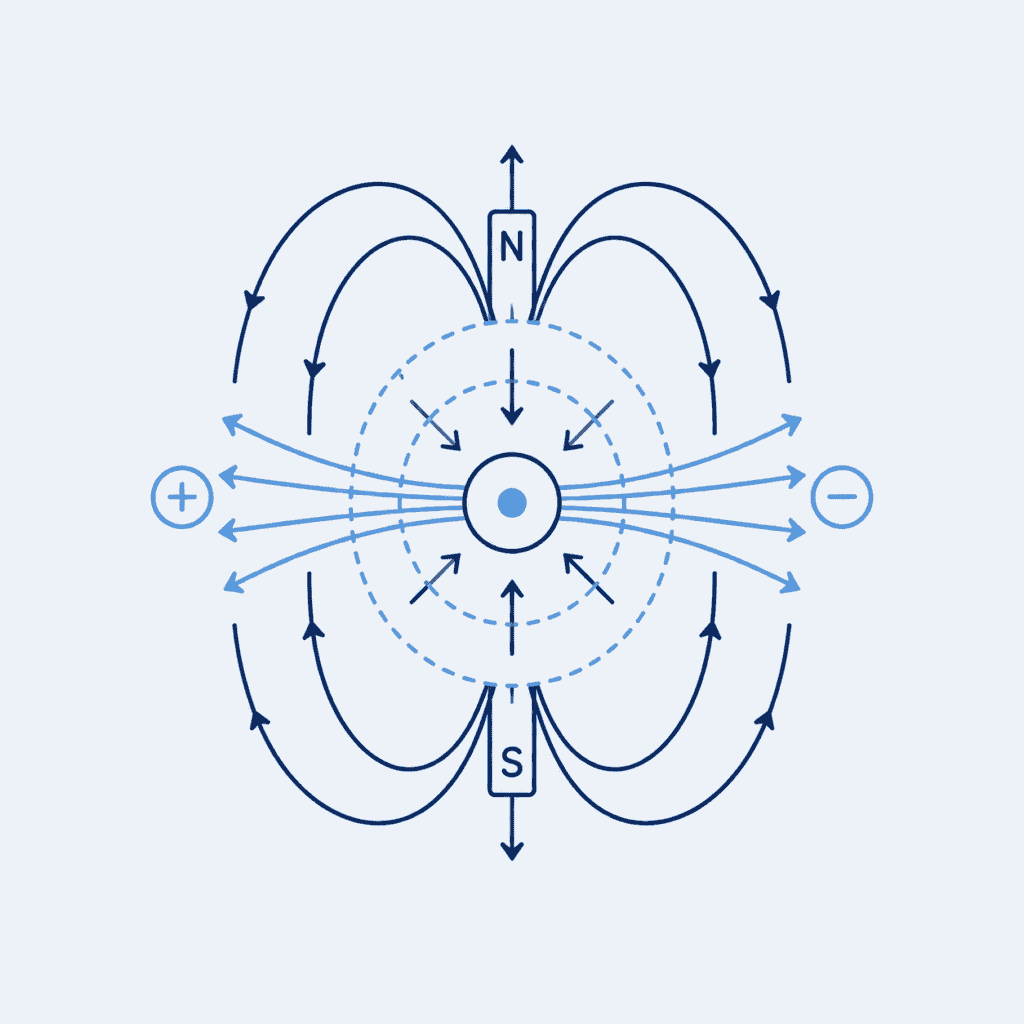
Field Sensing
The measurement of magnetic, electric, and gravitational fields
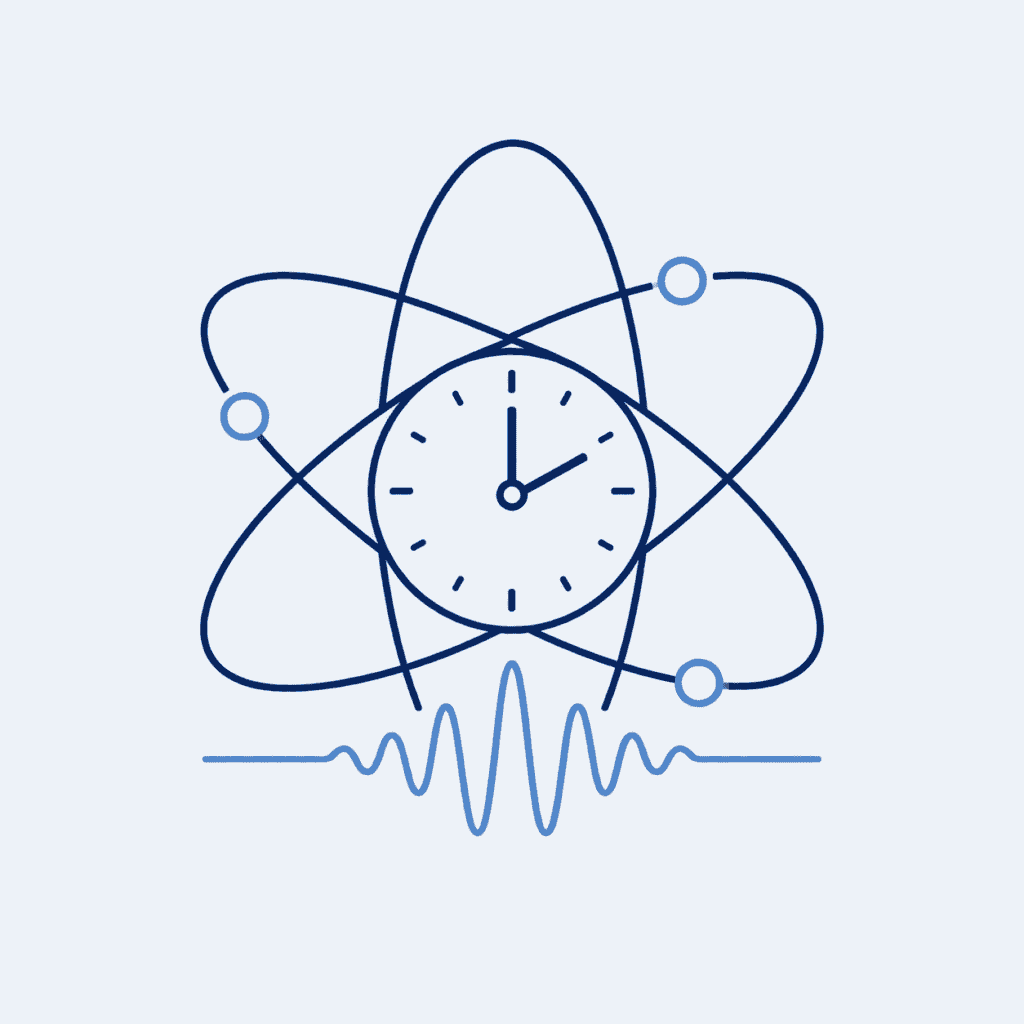
Time and Frequency
Atomic clocks
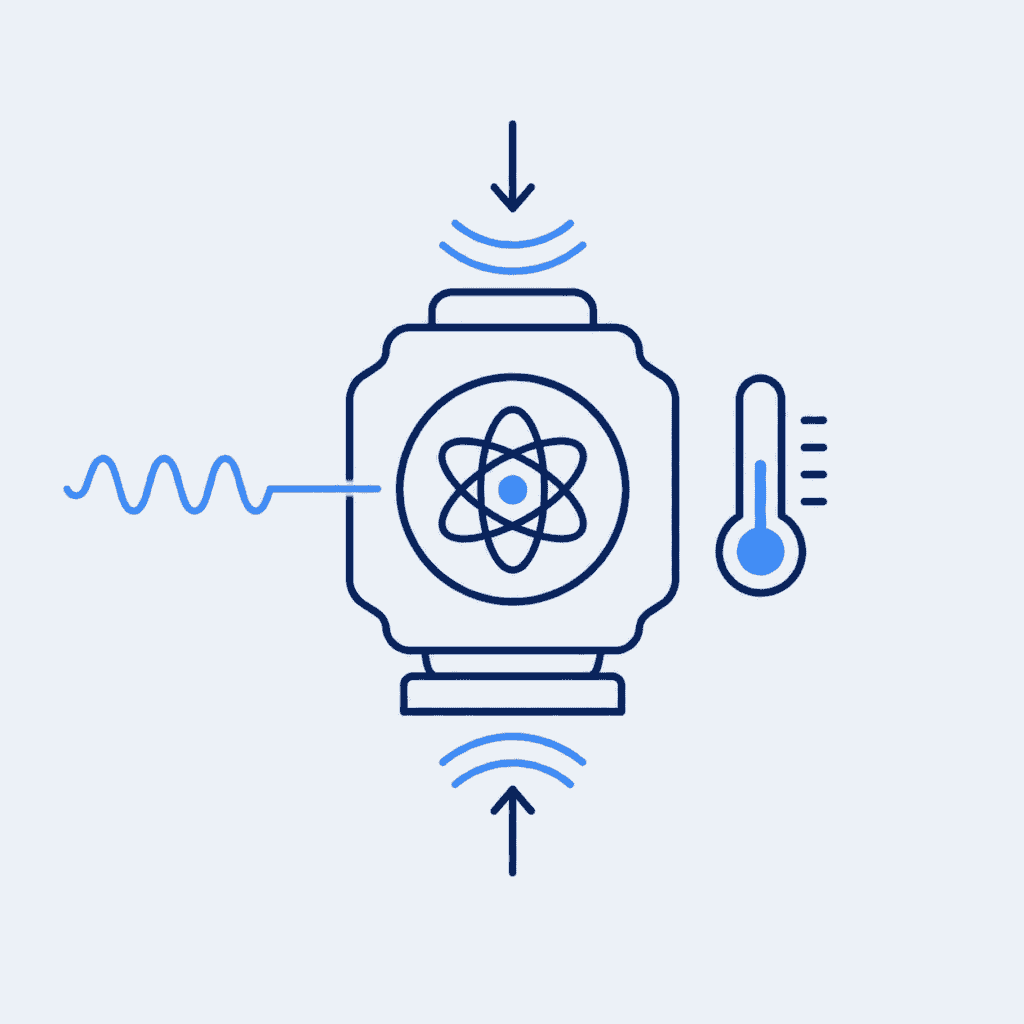
Quantum-Enhanced Detection
Measuring light temperature and power
The Innovation Authority, in conjunction with the DDR&D, invested in this field even before the creation of the first National Quantum Program, through the quantum sensors consortium, which aimed to mature academic knowledge and transfer it to industry. The consortium included the development of magnetometers, gravity sensors, and atomic clocks.
Quantum sensor research centers operate in Israel today at the Weizmann Institute, Bar-Ilan University, Hebrew University, and the Technion, alongside large defense corporations such as Elbit Systems, Israel Aerospace Industries, and Rafael Advanced Defense Systems, as well as startups such as AccuBeat and Dotz Nano.
“Quantum sensors demonstrate how deep science becomes infrastructure that operates from communications and navigation to defense systems. Our role is to enable technologies like these to move beyond the laboratory and be tested under real-world conditions.”
Alon Stopel, Chairman of the Israel Innovation Authority