
More than 400,000 Employees in Israeli High-Tech in 2025: An Increase of 2.3% Compared to 2024
The number of employees in Israel’s high-tech sector increased from 210,000 in 2012 to 400,000 in 2025. This followed a slight decline in 2024, when the number of high-tech employees stood at 391,000.
Alongside the increase in employment, this is the third consecutive year with a downturn in the growth rate of high-tech employment, following a decade of average annual growth of 6% between 2013-2022. Over the past three years, the average growth rate declined to 1.3% per year, a figure lower than the average annual growth rate of all employees in Israel (aged 25-64), which stood at 1.8% during this period. In other words, after several years in which high-tech employment grew rapidly, recent years have seen a slower growth rate than in the rest of the economy.
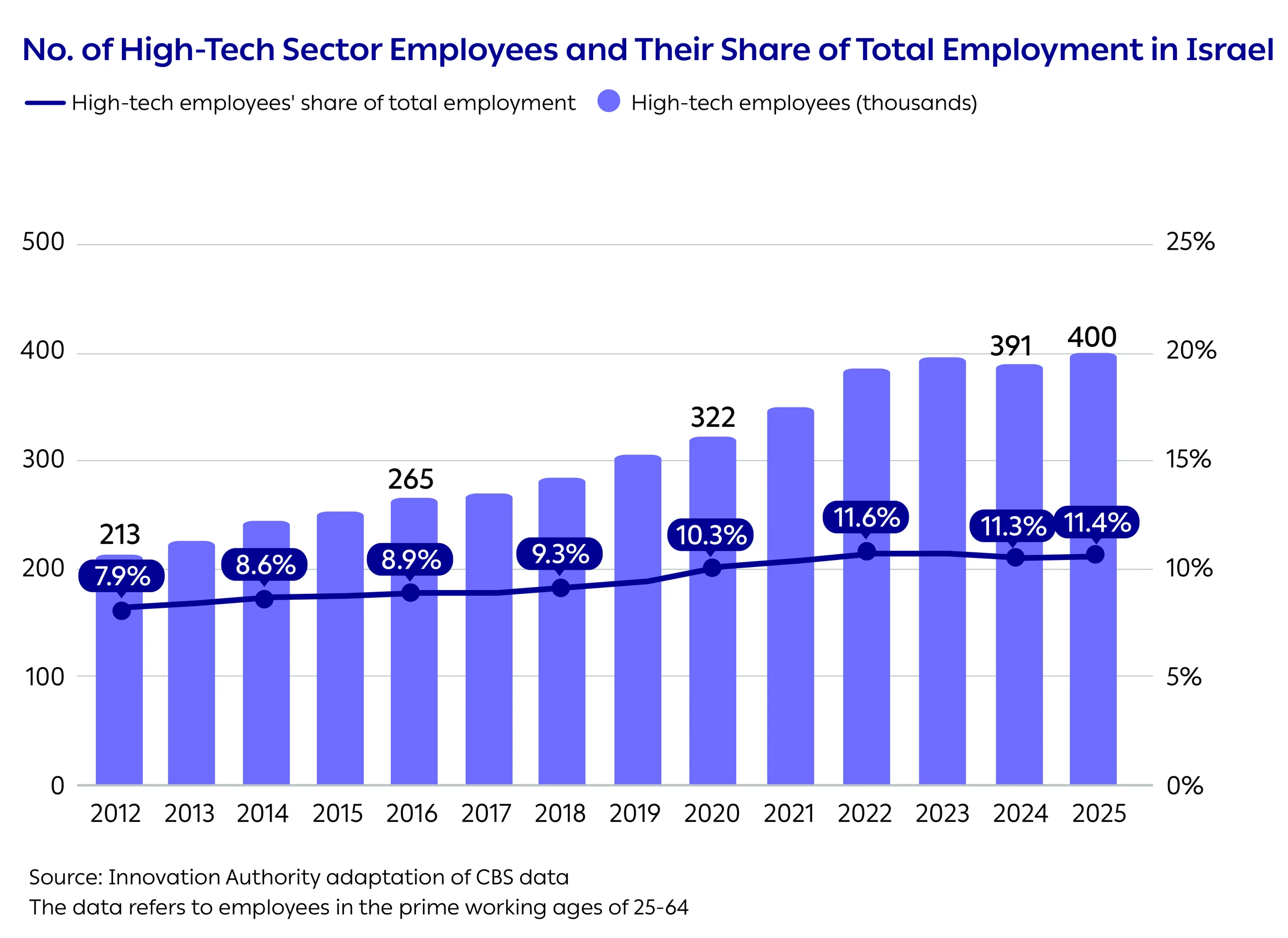
The share of high-tech employees out of all employees in Israel increased from 7.9% in 2012 to a peak of 11.6% in 2022-2023. It then stabilized at around 11.3% in 2024 and 11.4% in 2025.
The downturn in the sector’s employment growth rate, first recorded in 2023, comes amid global trends of declining investment in high-tech and an ongoing security reality that impairs the sector’s activity. Furthermore, the past year may have demonstrated the initial impact of Artificial Intelligence, although it is still too early to determine whether this is a structural and permanent change or one driven by other temporary factors.
For the First Time in a Decade: A Decline in the Number of High-Tech R&D Employees
While the share of high-tech employees of all employees in Israel remained almost unchanged, there was a slight shift in the mix of roles within the sector in 2025. R&D roles remained dominant, accounting for 49% of high-tech employees (about 194,000 R&D employees). However, there was a moderate decline in both the number and share of employees in these roles: approximately 3,500 fewer employees than the previous year, and a decline of 2 percentage points in their share of the sector, from 51% of high-tech employees in 2024 to 49% in 2025.
At the same time, employment in product roles increased by 15,000 in 2025. The relative share of these roles rose to 24% of all high-tech employees, compared to 21% in 2024. By contrast, the moderate downward trend in corporate roles continued, both in the number of employees and in their relative share, totaling 110,000 employees, who accounted for 28% of high-tech employees.
The change in the ratio of R&D to product employees may be a one-time event or signal a gradual shift in the mix of employees required in the sector. Although this cannot be determined based on a single year’s data, the introduction of Artificial Intelligence tools that streamline development work may explain part of the change.
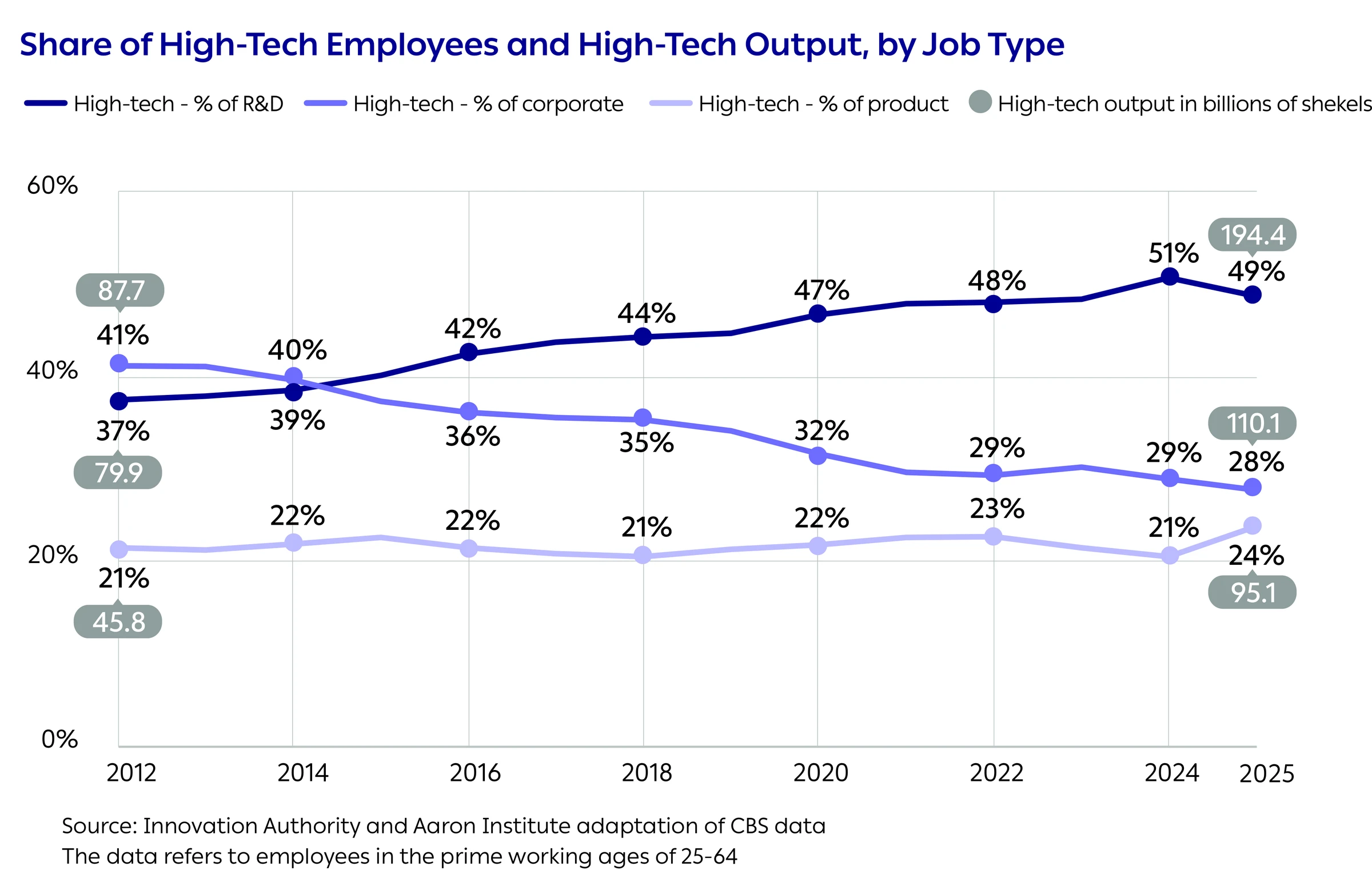
R&D roles: ICT service managers, electrical and electronics engineers, software developers and applications analysts.
Product roles: Product manager, user experience specialist; Design sub-cluster – designers in various specializations, business analyst.
Business / corporate roles: Marketing, sales, customer success, human resources (HR), legal, finance, management and operations.
Increased Employment of R&D Personnel in High-Tech Manufacturing Companies
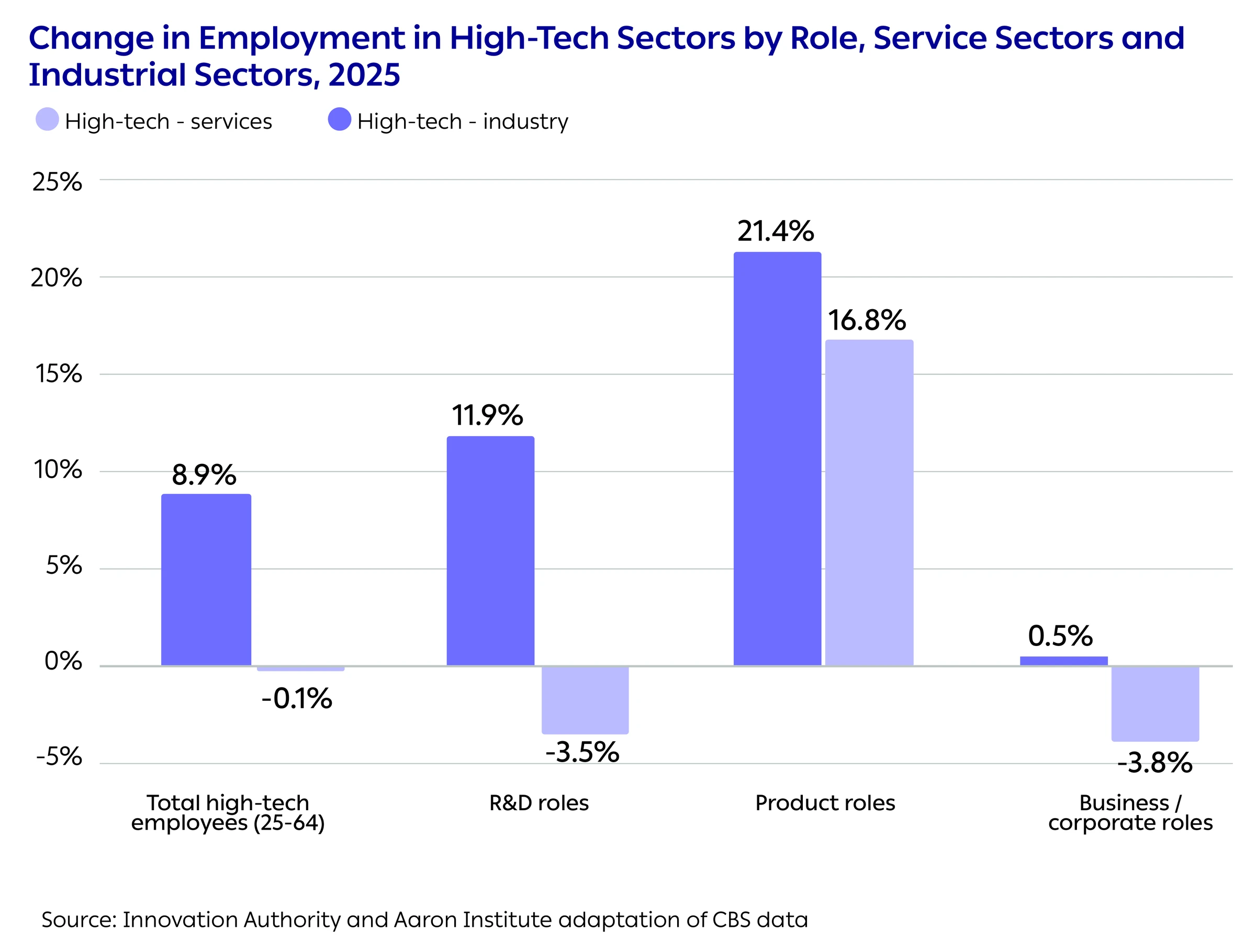
Israeli high-tech is software oriented. Approximately 70% of high-tech employees are employed in the high-tech services segment, which includes software companies. Nevertheless, most of the growth in high-tech jobs in 2025 was driven by increased employment in high-tech industry (hardware). This reflected an increase of 8.9% to 119,000 employees in 2025, alongside an 0.1% decline in high-tech services employees (software) to 280,000.
The gap is particularly evident in R&D roles which rose by 11.9% in high-tech industry to reach 25,000 employees, while declining by 3.5% in high-tech services to 169,000 employees. Product roles increased in both segments, but at a higher rate in high-tech industry: about 21.4% annual growth compared to about 16.8% in high-tech services.
These trends also align with the growth in high-tech industry output in 2025.
Output Per High-Tech Employee Continues to Grow and Exceeds Every Other Sector of the Economy
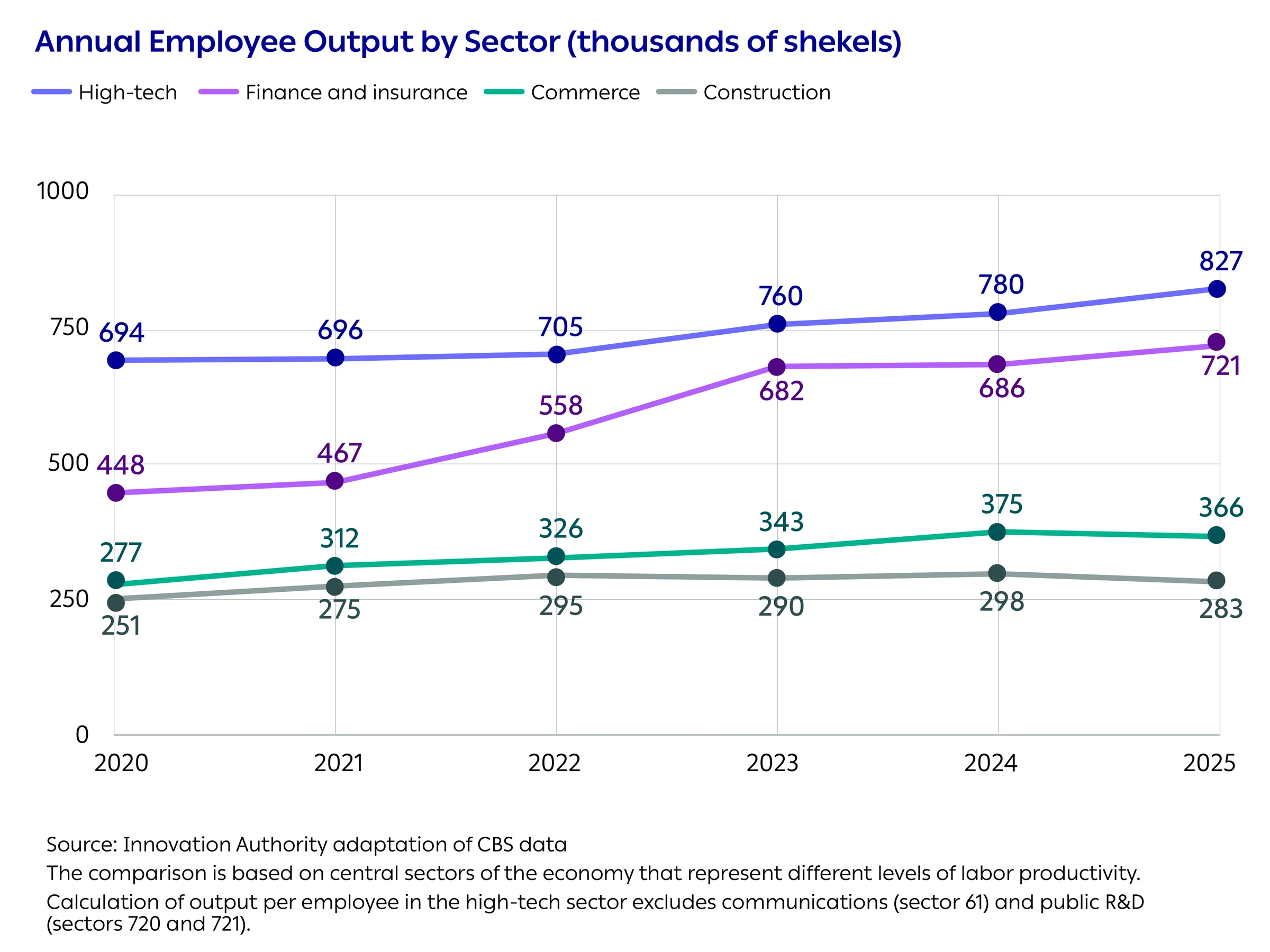
Over the past decade, employee output has increased across all sectors of the economy, but the high-tech sector continues to dominate in relation to all other sectors. In 2025, annual output per high-tech employee stood at NIS 827,000, compared to NIS 721,000 in financial services sectors, and only NIS 366,000 and NIS 283,000 respectively, in the commerce and construction sectors.
This data illustrates the structural productivity advantage of the high-tech sector which stems, among other factors, from characteristics such as high knowledge levels, technological innovation, and scalability, all enabling higher added value per employee.
At the same time, an upward trend is evident in other sectors, particularly the financial sectors, which grew faster than high-tech in 2021-2023. Over the past three years, however, output per employee in finance and high-tech has grown at a similar pace, with output per employee remaining higher in high-tech than in other sectors.
Annual Output Per Employee in Hardware Is NIS 100,000 Higher Than in Software
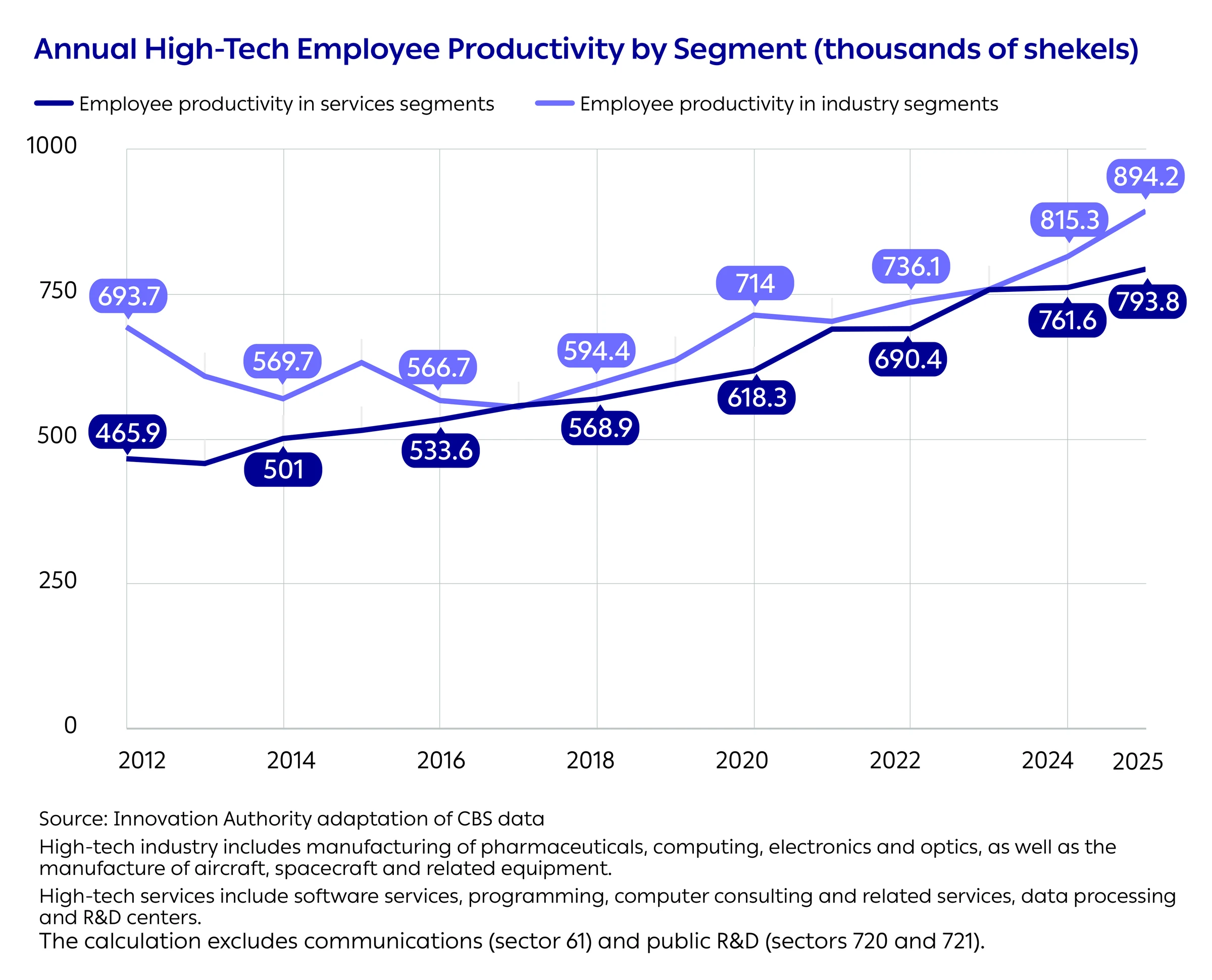
Over the past decade, output per employee in high-tech sectors has increased significantly across both industry and services segments. In 2025, annual output per employee in high-tech industry stood at NIS 894,000, compared to NIS 794,000 in high-tech services.
At the same time, productivity gaps between the services and industry segments narrowed over the same period. At the beginning of the decade, there was a significant gap in favor of the industry segments, which consistently demonstrated higher output per employee. However, over the years, output per employee in the services sector grew relatively quickly, gradually narrowing the gap.
In recent years, high-tech industry segments have continued to demonstrate higher output per employee. In 2025, the gap stood at approximately NIS 100,000 per employee per year, in favor of employees in high-tech industry.
A 12% Increase in High-Tech Job Openings in 2025
The number of job openings in the high-tech sector increased by 12.1% (1,979 jobs), from 16,361 in December 2024 to 18,340 in December 2025. This increase indicates growing demand for employees in the sector.
Most of the increase in demand for employees was concentrated in high-tech services (primarily software companies), where the number of job openings rose by 14% (an addition of 1,814 jobs) in 2025.
Between October 2023 and February 2026, a significant increase was recorded in the number of high-tech job openings, particularly in high-tech services, where the number increased by 72%, from 8,800 to 15,100. The industry segment recorded more moderate growth of 19%, from 3,000 to 3,600 jobs.
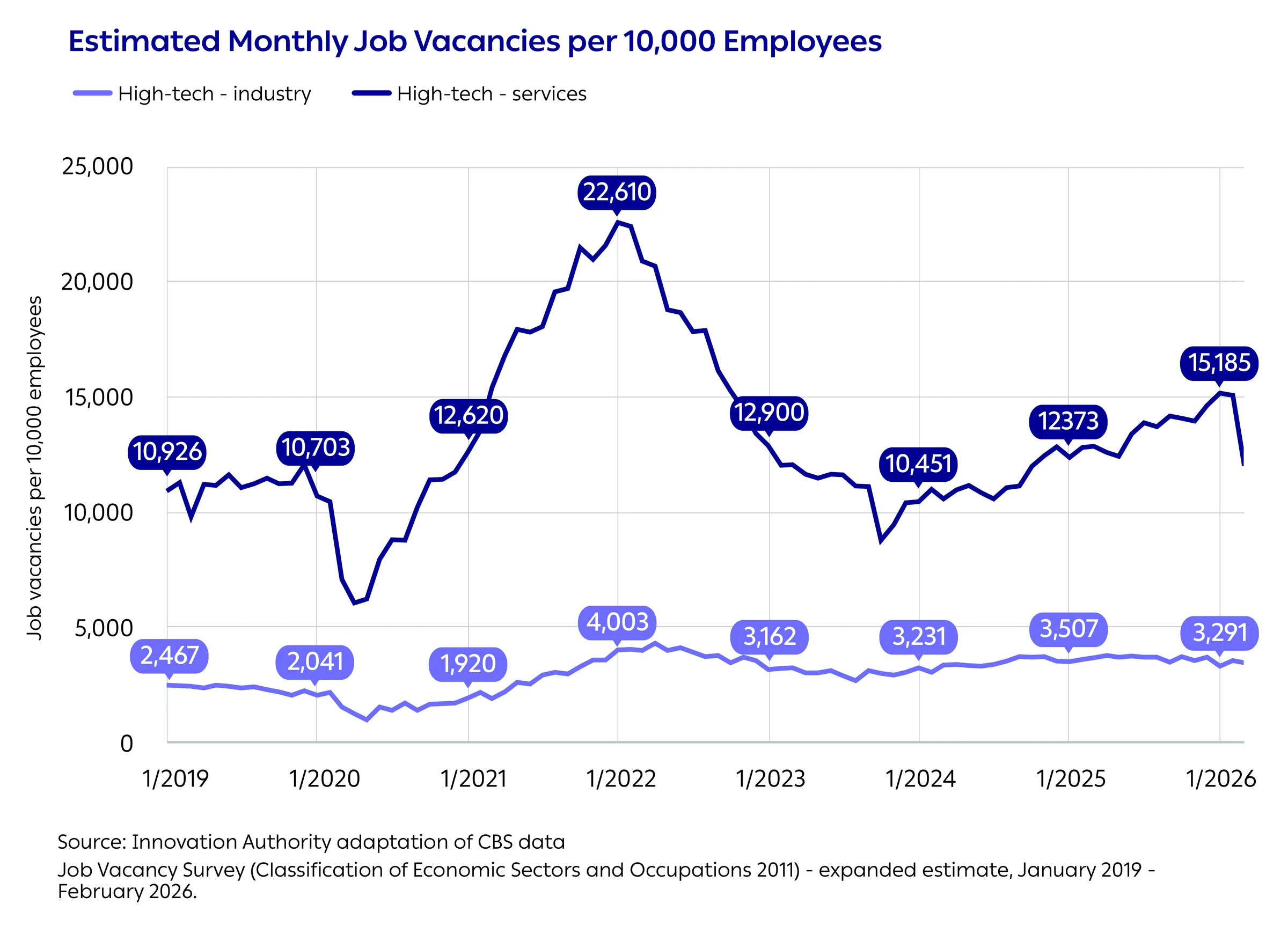
At the same time, the number of job openings in high-tech services declined in March 2026. It is possible that this decline occurred against the backdrop of Operation ‘Roaring Lion’ that broke out during that month, although it is still too early to determine whether this represents a change in trend.
The increase in demand for employees in high-tech services stands out amid the lack of employment growth in this field. This reality may indicate a need among employers to adjust the mix of employees or increased mobility between workplaces. This trend is also consistent with findings in the survey on the impact of Artificial Intelligence on employment in high-tech, published in January 2026. According to the survey, a 1.2% increase in recruitment during the second half of 2025 was explained, among other factors, by a 1.1% increase in employee layoffs.
Private Israeli High-Tech Companies Are Expanding Employment Abroad
As presented above, the growth rate of high-tech employment in Israel has slowed in recent years (from an average annual growth rate of 6% to 1.2% during 2023-2025). Various factors may explain this downturn, including companies’ management decisions to expand or shift operations abroad.
Analysis of employment data for private Israeli high-tech companies indicates that, alongside growth in the number of employees working in Israel over the past six years, there has also been an increase in the number of employees working abroad. The share of employees in Israel declined by 7 percentage points from 69% in 2019 to 62% in 2026.
The data analysis was conducted from 2019, before the COVID-19 pandemic, through to the end of the first quarter of 2026 (the most recent data available). It indicates a slow but consistent increase in the number of employees working abroad throughout the entire period.
The analysis does not include information on Israeli companies acquired or on Israeli branches of multinational companies. Trends in this data may differ, since such companies inherently include higher rates of overseas employment.
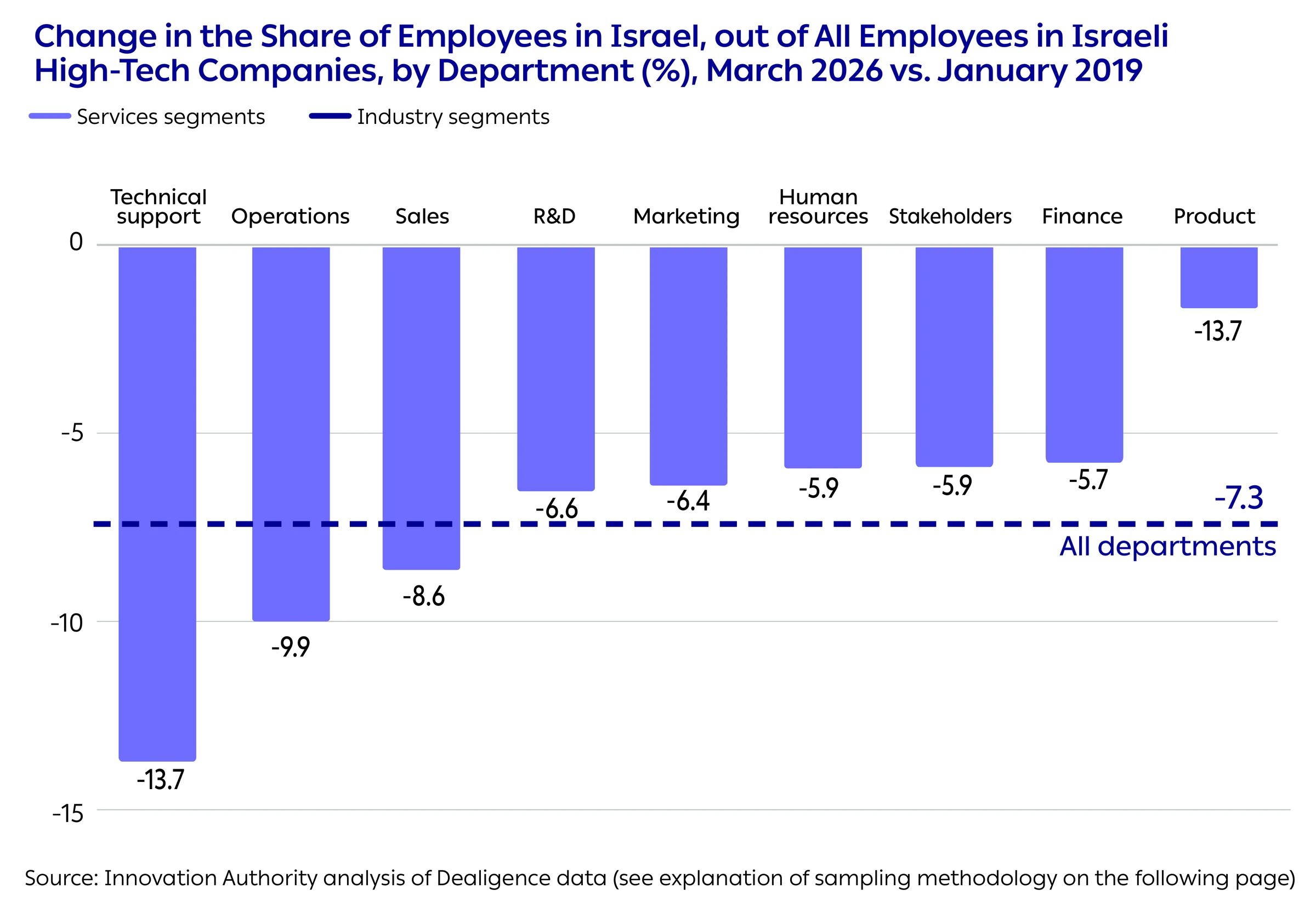
Changes over time in the share of employees working in Israel may reflect the maturation of companies and the need to expand departments in close proximity to customers, such as support, operations, marketing, and sales departments, as shown in the chart data.
The most significant decline in the share of Israeli employees occurred in technical support departments, where the share of employees in Israel declined by 13.7 percentage points, followed by operations (9.9 percentage points) and sales (8.6 percentage points).
At the same time, the decline in the share of employees located in Israel also occurred in core departments such as R&D (a decline of 6.6 percentage points) and product (a decline of 1.6 percentage points), as well as in corporate functions such as human resources (a decline of 5.9 percentage points) and finance (a decline of 5.7 percentage points).
Methodology for Sampling and Analysis of Dealigence Data
The analysis is based on cross-referencing Israeli high-tech companies from the IVC database with the Dealigence database, which includes historical information on companies employing workers in Israel and on the global distribution of their employees. The information in the Dealigence database relies on LinkedIn accounts of company employees.
A total of 10,603 active high-tech companies in Israel during 2019-2026 were examined. Some companies ceased operations during the period and were removed from the analysis in those years, while others were added over time following their establishment.
- The analysis was conducted monthly, from January 2019-March 2026.
- The sample does not include companies identified as non-Israeli multinational corporations.
- Furthermore, companies with fewer than 10% of employees in Israel and whose headquarters are not located in Israel were excluded from the sample.
- Companies that became public were included only until the date of their IPO.
- Companies that were acquired were included only until the date of acquisition, unless the acquiring company itself was identified as an Israeli company.
After applying these filters, 8,079 companies employing approximately 200,000 employees contributed to the analysis, during at least part of the period examined. Some companies were included only until a certain point in time, such as until an IPO or acquisition, and therefore, the sample size changed over time.
This analysis focuses on changing trends and does not relate to absolute numbers, due to known differences of data coverage quality between countries resulting from varying levels of LinkedIn usage. While coverage in Israel, the United States, Europe, and parts of Asia is almost complete, the actual share of employees in developing countries may be higher than that reflected in the data presented here.
Most of the Growth in Overseas Employment by Private Israeli High-Tech Companies Took Place in the United States
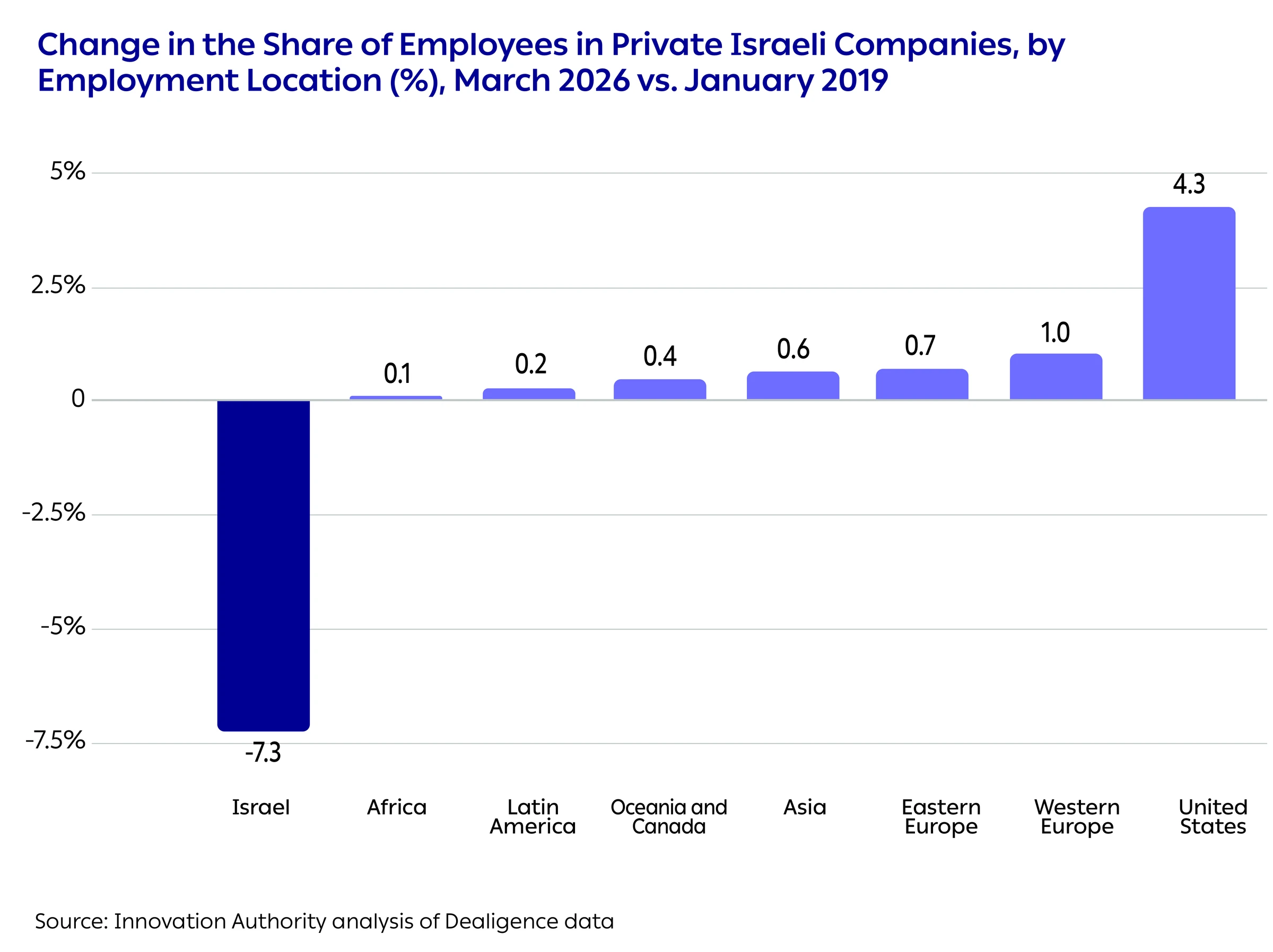
Analysis of the geographic regions in which private Israeli high-tech companies expanded employment indicates that the United States ranked first, with an increase of 4.3 percentage points in the share of Israeli high-tech employees working there. The United States was followed by Western Europe (1 percentage point) and Eastern Europe (0.7 percentage points).
Although most of the increase occurred in the United States, this reflects a change of only a few percentage points over more than six years (Q1 2019-Q1 2026).
The expansion in the US is consistent with the tendency to expand operations close to the target market, primarily through marketing, sales, and technical support units – the departments that recorded the highest growth rates outside Israel.
Growth in R&D Departments Outside Israel: Mainly in Eastern Europe and the United States
Most of the growth in R&D activity by private Israeli high-tech companies outside Israel occurred in Eastern Europe and the United States. Between January 2019-March 2026, the share of R&D employees located in Israel declined by 6.57 percentage points. The share of R&D employees in Eastern Europe increased by 1.7 percentage points (from 4% to 5.7% of all R&D employees), while in the United States, the share increased by 1.6 percentage points (from 7.5% to 9.1% of all R&D employees).
The concentration of growth in R&D positions in Eastern Europe throughout the entire period examined (2019-2026) suggests decisions driven by labor-cost considerations and the selection of destinations with lower average developer salaries than in Israel.
At the same time, the increase in the United States, which was also consistent throughout the entire period, cannot be explained by labor costs and may indicate decisions to shift centers of activity outside Israel.
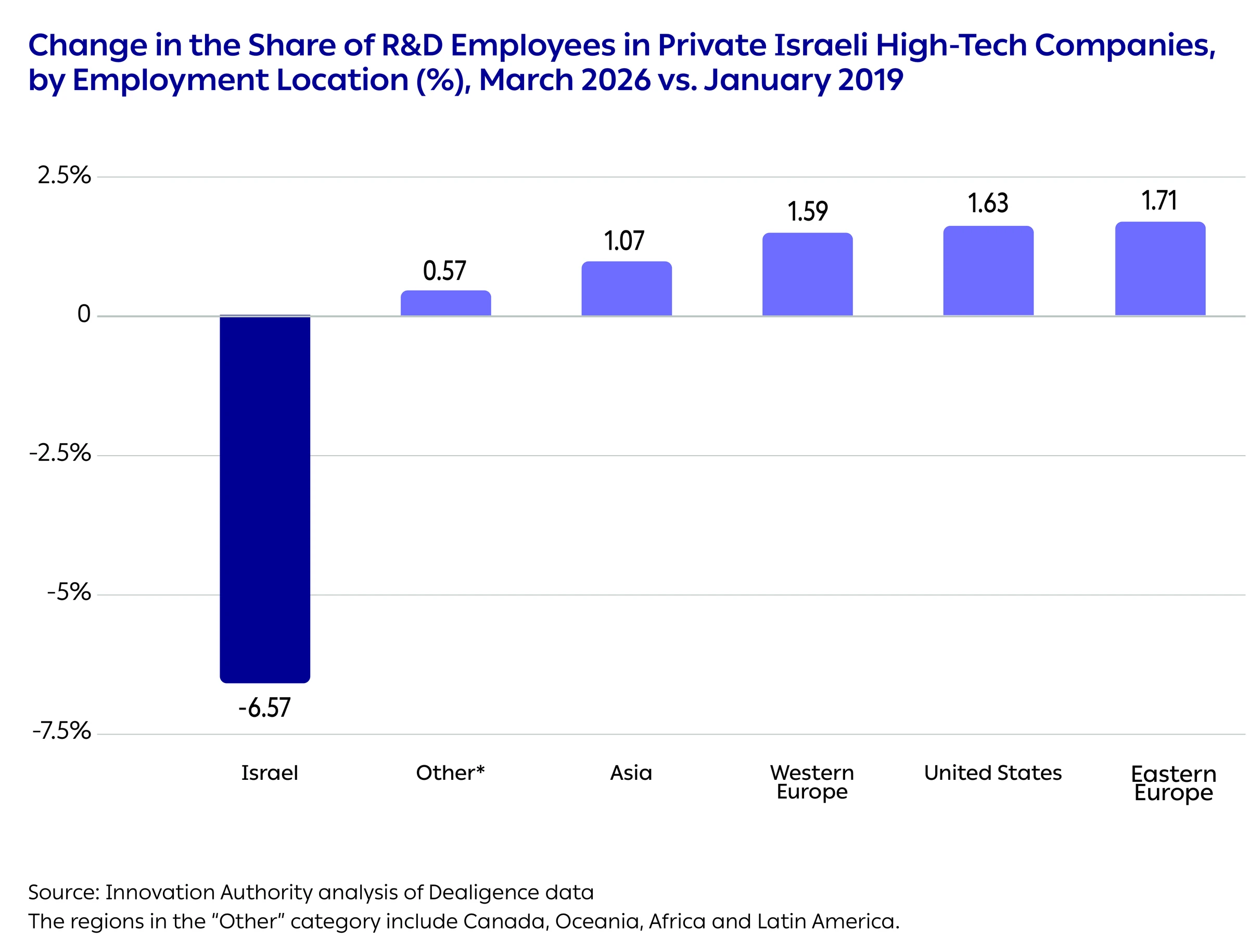
Employment in Private Israeli High-Tech Companies: A Decline of 9.6 Percentage Points in the Share of Senior Executives Employed in Israel
One of the most prominent changes in the share of employees working in Israel in private Israeli high-tech companies occurred in senior executive (C-level)1Senior executives: employees in senior management positions (C-level and above) across all organizational departments, according to Dealigence classification. positions. In this group, the share of employees located in Israel declined by 9.6 percentage points, compared with a 7.3 percentage-point decline across all positions combined since January 2019.
Most of the increase in senior positions outside Israel occurred in the United States, where this figure rose by 5.8 percentage points. Throughout the entire period examined, the US remained the largest center of senior executives in Israeli companies outside Israel with 23% of senior executives in private Israeli high-tech companies as of March 2026. During the same period, 65% of senior executives in Israeli companies were employed in Israel, 6% in Western Europe, and the remainder across a broad geographic distribution.
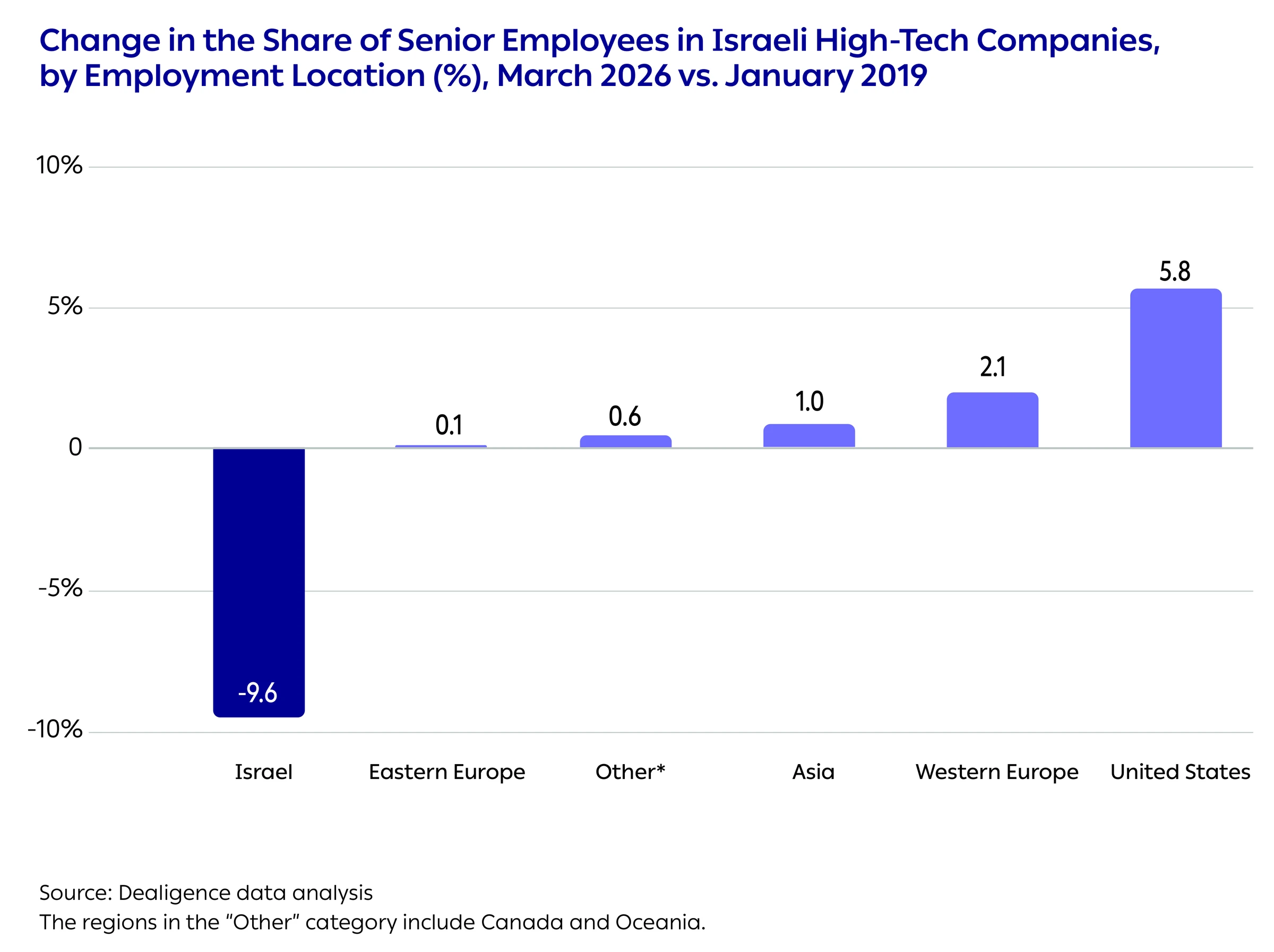
This trend may indicate the relocation of decision-making and management centers of Israeli companies outside Israel. The phenomenon reflects the maturation of Israeli high-tech but may also have implications for the future development of companies and their employees in Israel.
35% of High-Tech Companies Reported an Increase in Employee Requests for Relocation During the Second Half of 2025
The growth of Israeli companies abroad may create opportunities for employees to relocate overseas.
A survey conducted by Zviran in conjunction with the Innovation Authority found that 35% of Israeli high-tech companies reported an increase in the number of employees requesting relocation during the second half of 2025. In addition, 19% of companies reported an increase in the number of employees who actually relocated.
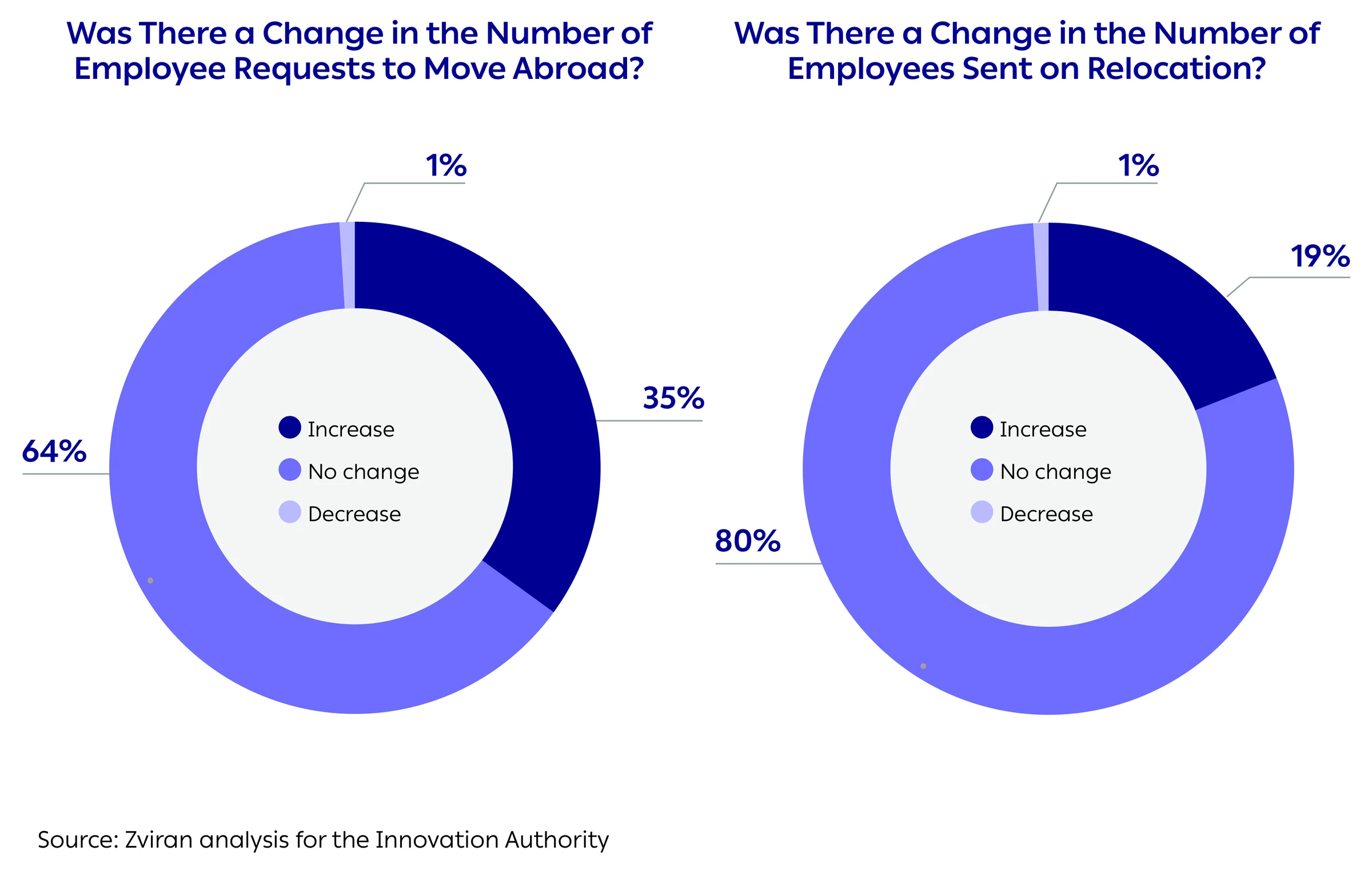
About the Survey: The survey was distributed to 500 employers during the last two weeks of December 2025 as part of Zviran’s semiannual survey.
A total of 263 employers responded to the survey, 70% of whom (192) were from the high-tech sector, collectively employing approximately 112,000 workers – about 28% of all high-tech employees in Israel.
- Most companies in the sample (89%) employ more than 50 employees.
- The sample represents employers of 80% of employees in the sector.
- Due to the nature of the sample, the trends presented may not reflect the situation among very small employers.
- The responses presented here only reflect high-tech employers.
A Further 14% Increase in the Number of High-Tech Employees Leaving Israel Long-Term During the Summer of 2024, after a 42% Increase in 2023
Analysis of departure data from Israel indicates an increase in the number of high-tech employees leaving Israel for the long-term.
The trend is particularly evident in the analysis of average departures during the summer months (July-August), when most long-term departures occur, likely in line with the school vacation period and the tendency to relocate before the start of the academic year. In 2022, the average number of departures during the summer months stood at 610 high-tech employees per month. In the summer of 2023, following the announcement of the judicial reform, the average number of departures reached 867 high-tech employees per month – a 42% increase.
In 2024, following the events of October 7, the average number of departures during the summer increased further to 944 per month – an additional 14% increase. The increase in the number of employees leaving for extended periods during these years significantly exceeds the growth in high-tech employment. It does not therefore reflect demographic growth, but rather a behavioral change.
During non-summer months, no clear trend is evident, apart from a sharp, one-time increase in long-term departures in October 2023, apparently in response to the events of October 7. In October 2023 alone, 1,207 high-tech employees left Israel for extended periods, nearly three times the number recorded in October in the previous two years (407 departures in October 2022 and 434 in October 2024).
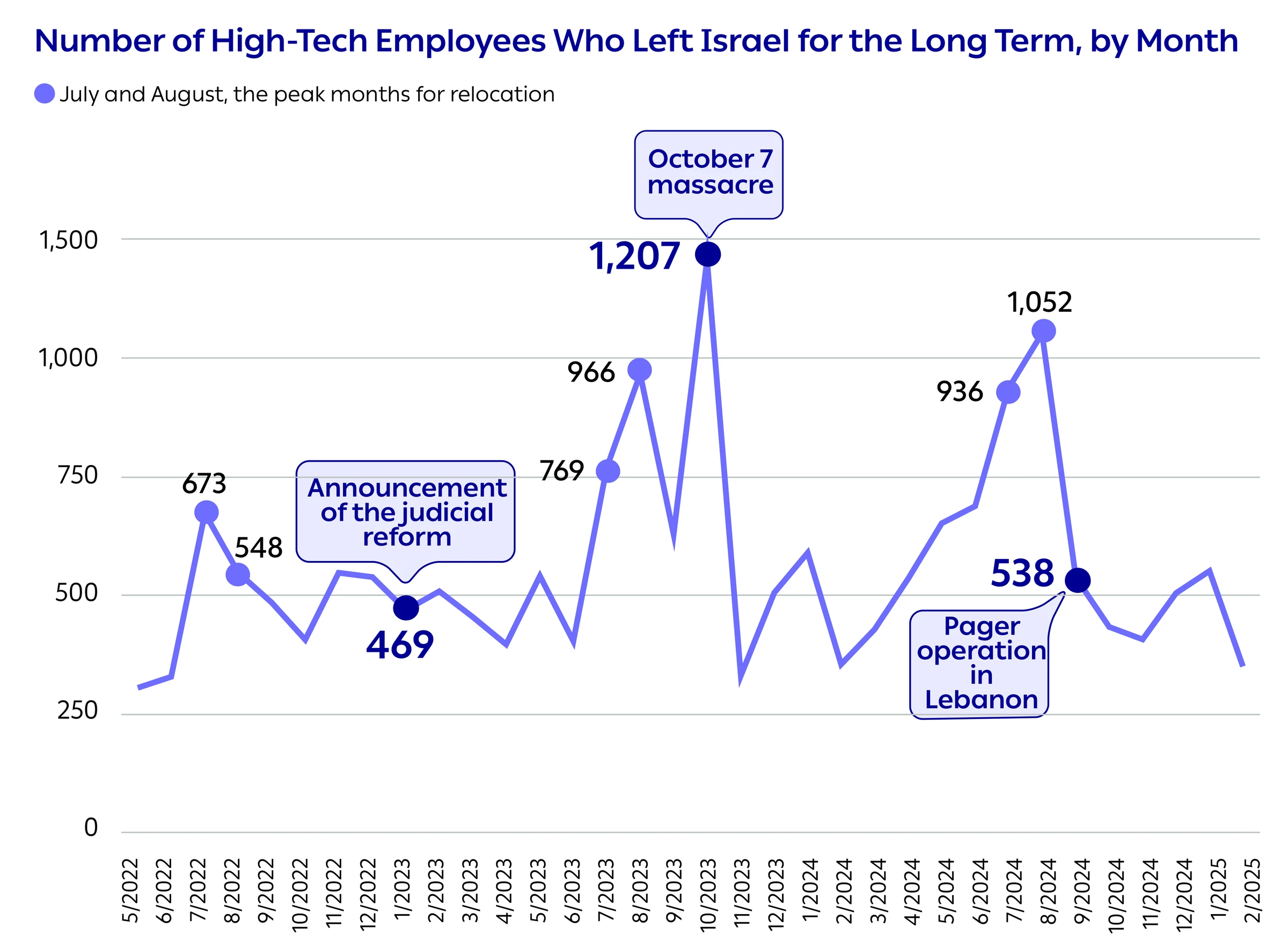
Long-departure from Israel is defined as a period of at least a year. The most updated data on long-term departures therefore relates to people leaving Israel in 2024. An indication of those leaving long-term in 2025 can be gained by examining trends in those leaving for more than 3 months and the ratio of this group to the overall group of those leaving for extended periods.
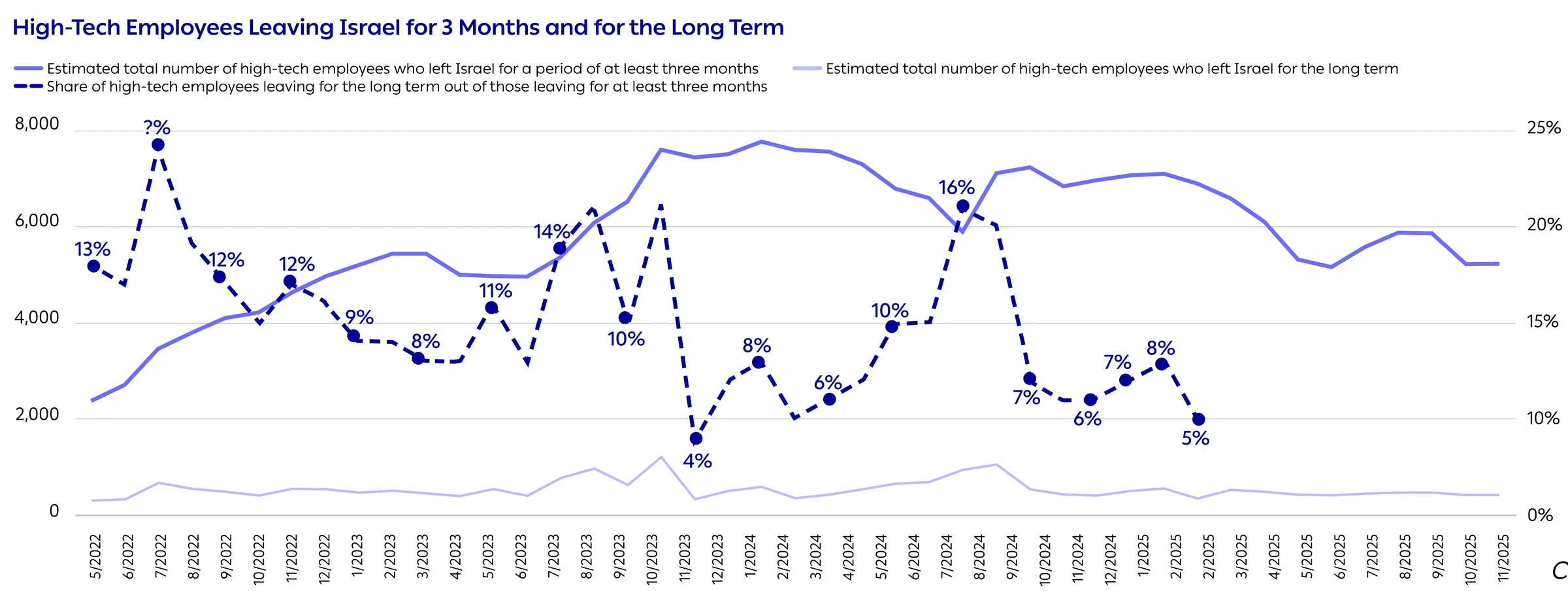
The data shows that after a constant increase in the number of high-tech employees leaving Israel for periods of 3 months or longer since 2022, January 2024 marked the beginning of a downward trend from a peak of 7,772 leaving during January 2024 to a level of 5,232 leaving for at least 3 months in November 2025 (with isolated increases around the summer months of July-August).
The graph shows that the ratio between those leaving for 3 months and those leaving long-term varies over time with a seasonable upturn during the summer and surrounding months. The average annual ratio in 2024 stood at 8%. On the assumption that no significant change is expected in this respect, it can be estimated that there was a decline in the number of high-tech employees leaving Israel long-term in 2025 compared to 2024, although the level is still higher than that recorded before the war.
Methodological Limitations and Data Analysis
High-Tech relocation data analysis is based on identifying high-tech employees by occupation in the 2022 Population Census and which is therefore available from May 2022. Some of those leaving Israel for extended periods may have entered high-tech employment after 2022 but were not counted as high-tech employees. As a result, the figures reflect a conservative estimation of the level of high-tech employees leaving Israel.
Long-term departure is defined as absence of at least 9 months per year. The departure date was determined as the beginning an absence from Israel of at least 3 months. For example, a high-tech employee leaving Israel on 1.1.2023 will be considered as having left long-term only if they do not return to Israel before 1.4.2023 and if residing abroad for at least 9 months during the year until 1.1.2024 (not necessarily consecutively, except for the first 3 months).
Some employees counted as leaving long-term may have returned to Israel immediately at the end of a year, while others continued to reside abroad and not returning at all. Data on trends of those returning to Israel during this period was not taken into consideration as part of this analysis.