In 2025, High-Tech Output Grew in Real Terms By 8.2% And Contributed 50% To Economic Growth
In 2025, high-tech output totaled NIS 352 billion, up in real terms 8.2% from 2024 (NIS 324 billion). High-tech output also increased as a share of GDP. In 2025, high-tech accounted for 18.3% of GDP,1The calculation of high-tech’s share of GDP is based on CBS estimates, which may be revised retrospectively up to four years each year. As a result, high-tech’s share of GDP in recent years is slightly lower than the preliminary estimates published for 2023 and 2024. 0.6 percentage points higher than in 2024 (17.7%). In addition, high-tech output contributed to 50% of the total growth in Israel’s GDP (1.44% out of a total of 2.9%). This compares to a negative contribution to GDP growth in 2024 (-0.1%).
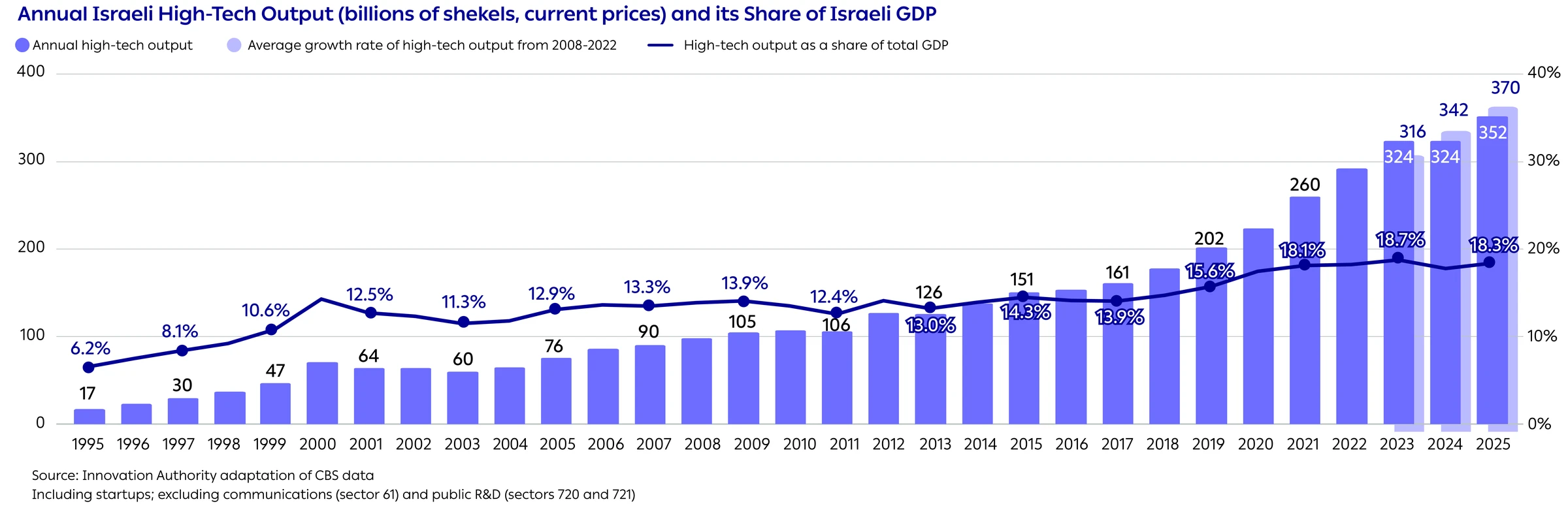
Real annual growth in high-tech output averaged approximately 6.5% between 2008-2022, however this rate declined to an average of 1.9% during 2023-2025. Consequently, despite the recovery in the growth rate of high-tech output over the past year, a gap of NIS 19 billion remains between current output and the expected level had the historical growth rate been maintained.
Most of the Growth in High-Tech Output in 2025 Came from Hardware
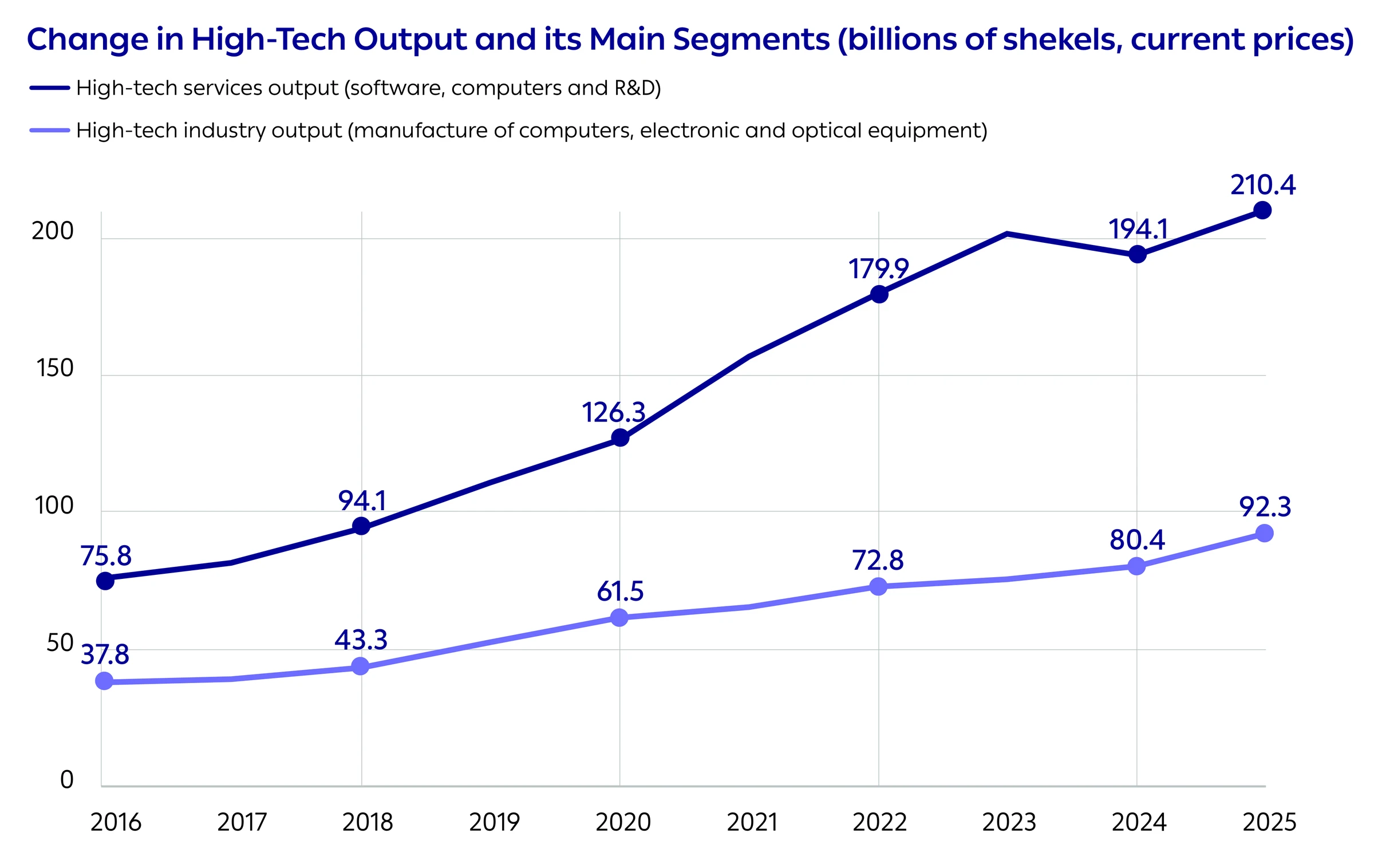
The increase in high-tech output in 2025 compared to 2024 was driven primarily by hardware manufacturing (computers, electronic and optical equipment). This segment’s output increased by NIS 16 billion in 2025, in contrast to the years 2022-2024, during which this figure increased by no more than NIS 1.5 billion annually.
Even so, high-tech industry – including the hardware segment – accounts for only 31% of total high-tech output whereas high-tech services, that includes software development (computer programming, computer consulting, and related services), account for 69% – more than twice the share of hardware.
Alongside the growth in most high-tech segments, a decline of more than 10% was registered in the output of the pharma and drug manufacturing sector in 2025 (a decline of NIS 733 million compared to 2024).
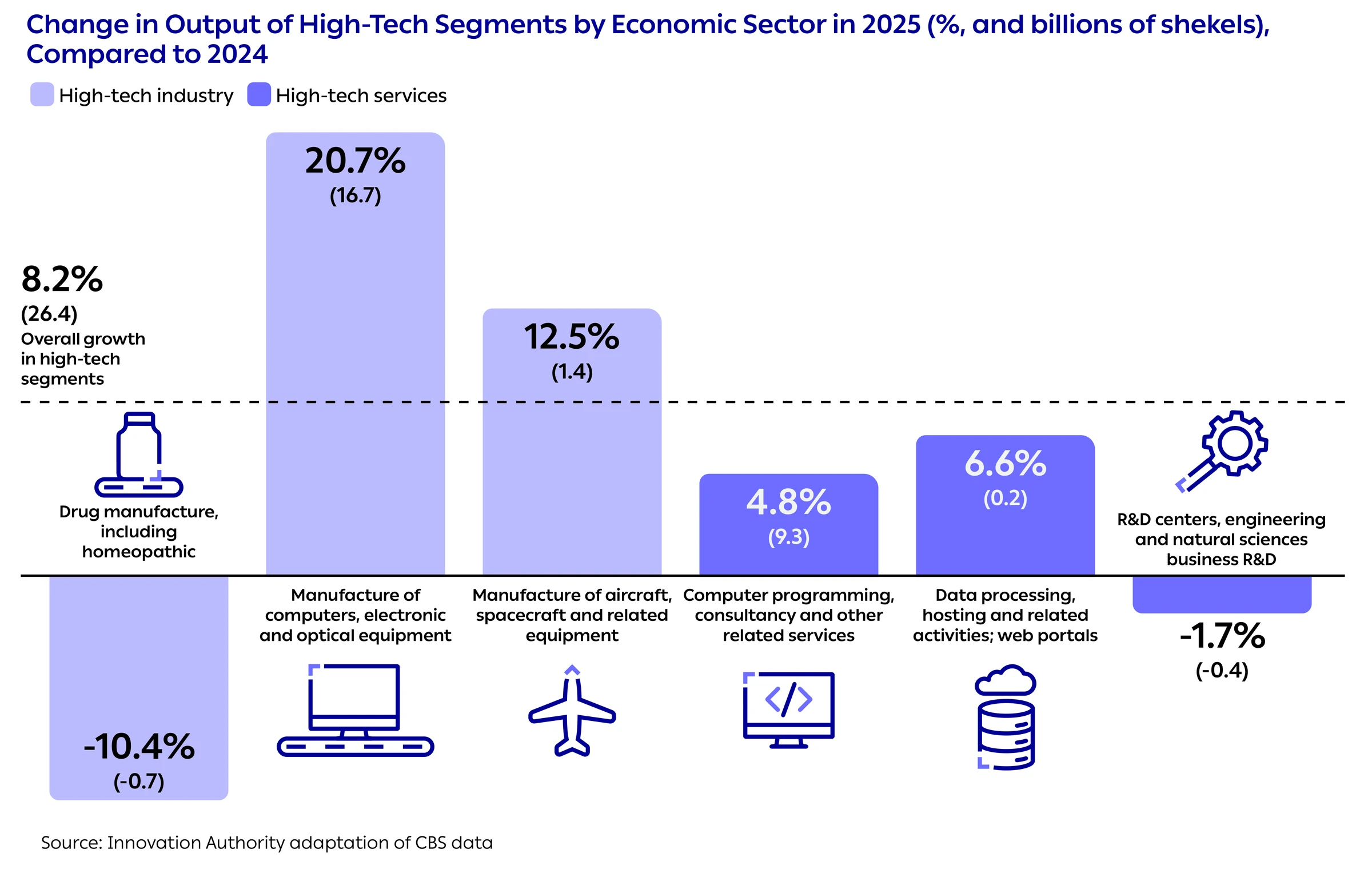
Alongside the growth in high-tech industry’s output, a marked increase of NIS 9 billion was recorded in the output of high-tech services (computer programming, consulting, and related services), following a decline of NIS 18.4 billion in this segment in 2024.
Between 2012-2022, the Israeli economy enjoyed significant growth in high-tech software. During the decade preceding 2023, this segment grew at an average annual rate of 11%. A decline in growth rates can be detected from 2023, starting with a growth rate of just 3.22% in 2023, followed by negative growth of -9% in 2024, and growth of 4.8% in 2025.
High-Tech’s Share of Exports Continues to Grow, Reaching 58%
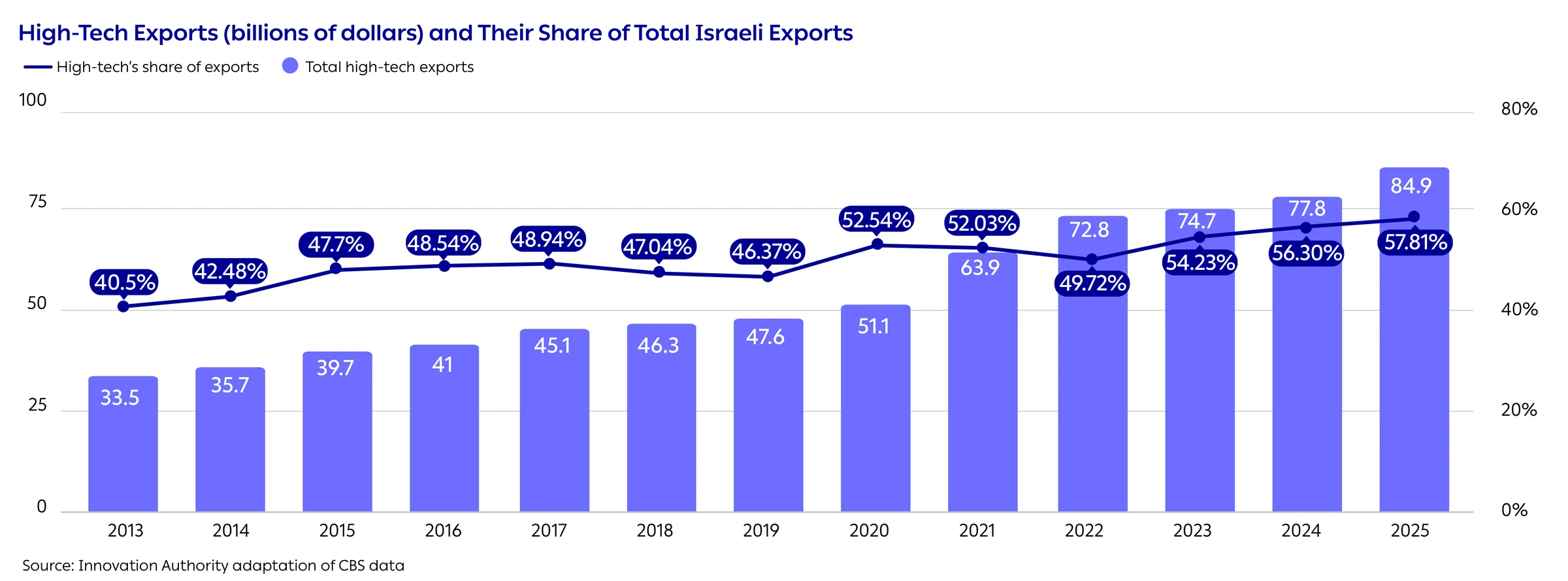
Israeli high-tech exports have increased over the past decade, reinforcing the sector’s position as the central component of Israel’s foreign trade. Data for 2025 reflects exports totaling USD 85 billion, approximately 58% of the economy’s total exports. This trend is driven primarily by the expansion of high-tech services exports, including software, data processing, storage, and related services.
Exports of high-tech services have increased by USD 42 billion over the past decade, becoming the dominant component (74%) of total exports in the sector. By comparison, exports of high-tech goods (hardware, pharmaceuticals, and aircraft) increased by only USD 1 billion during this period.
Exports Account for 79% of High-Tech Output
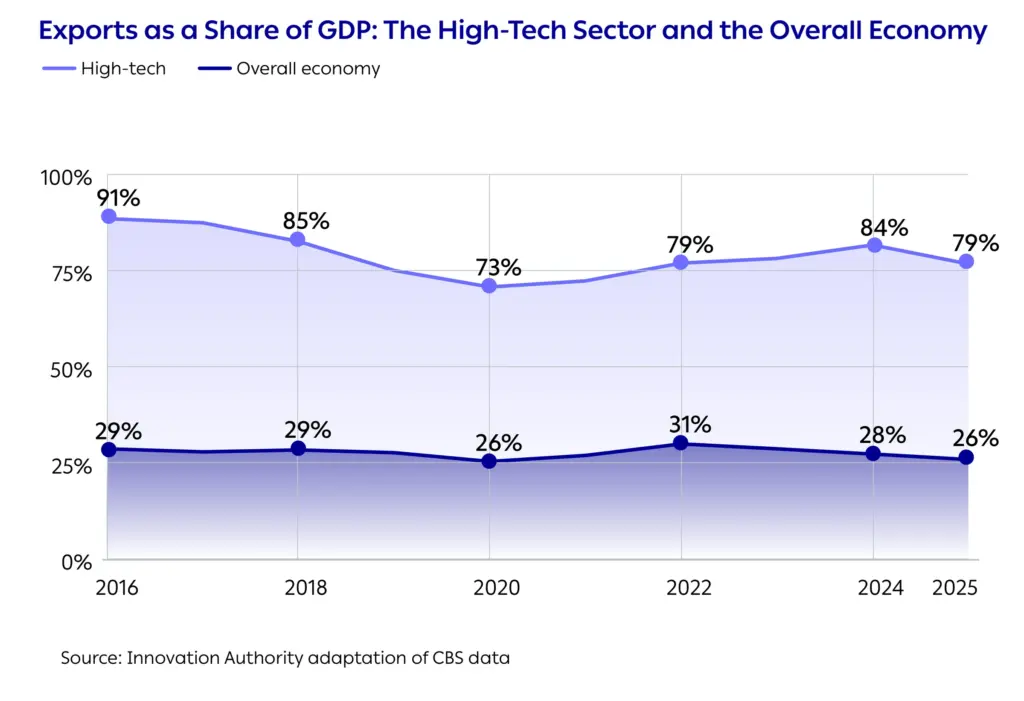
High-tech output relies heavily on exports. While exports account for only 26% of GDP across all sectors of the economy (including high-tech), high-tech exports account for nearly 79% of the sector’s output. This figure demonstrates the sector’s dependence on Israel’s international ties and its exposure to exchange-rate fluctuations.
For example, a change in the USD/NIS exchange rate from an average of NIS 3.7 in 2024 to an average of NIS 3.45 in 2025 resulted in a decline of NIS 21 billion in high-tech output in 2025 (equivalent to 1.1% of GDP). This exposure is concerning due to the continued decline in the exchange rate to NIS 2.9.2This calculation is solely for illustration and does not take into account other influences of USD depreciation including: cheaper import of goods and services for high-tech – which somewhat mitigates the phenomenon described here – and increased prices of Israeli products globally, that may reduce consumption of high-tech goods and services from Israel, thereby increasing the impact of the lower exchange rate on reduced output.
The sector’s dependence on international activity was also reflected in the Innovation Authority survey distributed to companies during Operation ‘Roaring Lion’. According to the survey, 35% of companies reported significant disruption to continued operations due to restrictions on international flights, which prevented meetings with customers and investors.