
The blood-brain barrier has long been considered an impassable frontier. Nevertheless, the Israeli startup Nanocarry has developed a nanotechnology-based platform that could transform the way medicine confronts neurological diseases
The blood-brain barrier (BBB) is the body’s most vital line of defense and, at the same time, is also one of modern medicine’s most significant challenges. It protects the brain from pathogens, toxins, and foreign particles, yet also blocks many of the therapeutics that could save lives.
The blood-brain barrier is impermeable to all large molecules, including antibodies and an estimated 98% of drugs. While breakthrough therapies are transforming healthcare in other parts of the body, the brain remains largely untouched.
A Mission Impossible – For Now
More than 450 million people worldwide suffer from neurological disorders, from Alzheimer’s and Parkinson’s to brain tumors, epilepsy, and degenerative diseases. In most cases, even the most advanced treatments that work elsewhere in the body are ineffective here, not because they are ineffective, but because they fail to reach their target.
The blood-brain barrier is a dense biological structure made up of tightly packed endothelial cells – the cells that line the inside of blood vessels – that selectively regulate what enters brain tissue from the bloodstream. Only small, fat-soluble molecules, or those that carry dedicated transporters, can pass through – and even then, in a limited fashion.
In recent years, the scientific-medical world has explored a range of creative strategies: biological carriers, the development of “disguised” molecules, ultrasound, and even attempts to circumvent the barrier via the nasal cavity or through invasive surgery. Most of these remain experimental and face serious safety and precision drawbacks.
Engineered Gold Nanoparticles That Can Penetrate the BBB
This is the challenge that Nanocarry, an Israeli startup, has taken up with its ambitious technology: engineered gold nanoparticles with a unique structure that can carry multiple copies of diverse therapeutics (antibodies, proteins, or small molecules) and cross the blood-brain barrier safely and with precision.
The company was founded in 2021 by three women: Prof. Rachela Popovtzer, one of the world’s leading experts in gold nanoparticle research; Dr. Oshra Betzer, who transitioned from high-tech into the world of neuro-engineering; and Dr. Revital Mandil-Levin, an experienced business developer and pharma executive who led business development at NeuroDerm, from its IPO on the NASDAQ until its acquisition by Mitsubishi Tanabe in a deal worth approximately USD 1.1 billion.
“Our goal isn’t just to reach the brain,” explains Dr. Mandil-Levin, “but to reach the right region of the brain, with the right drug, in the right concentration and at the right time. We aim to do all this without disrupting the barrier, without damaging it, and without introducing harmful substances into the system.”
Nanocarry’s AxS platform is based on engineered gold nanoparticles that utilize the vast surface area of nanometric particles. This property enables the attachment of numerous different molecules via a simple, fast, and reliable chemical process. Each nanoparticle is linked to an insulin molecule, which acts as a “Trojan horse,” enabling the drug to cross the blood-brain barrier.
“Our nanoparticle is built so that the blood vessels in the brain recognize it as insulin – a molecule the brain naturally allows in large quantities,” explains Dr. Mandil-Levin. “In reality, what passes through is the therapeutic payload attached to the particle – a complete drug. We don’t encase the drug inside a capsule but rather, load it directly onto the particle, so that it remains bound to it without being released, and becomes active precisely at the target site.”
In the initial phase, the company demonstrated that its technology could successfully deliver drugs into the brains of mice. “At first, we thought we could offer the platform to pharma companies developing antibodies for brain diseases,” recalls Dr. Mandil-Levin. “But we were met with significant skepticism. We were asked questions to which we didn’t yet have the answers, primarily regarding safety. We quickly realized that to prove this works, we would have to develop our own product.”
Nanocarry’s first product, based on the unique platform it developed, AxS007, targets brain metastases of HER2+ breast cancer. In recent years, antibody-based drugs such as Herceptin and Perjeta have revolutionized the treatment of metastatic breast cancer, turning it into a chronic condition that patients can live with for many years. These therapies are delivered monthly by infusion, cause relatively few side effects, and allow patients to maintain an almost normal lifestyle.
However, when this type of cancer spreads to the brain, which occurs in up to 50% of cases, even the most effective drugs are blocked by the blood-brain barrier, at which point the course of the disease changes dramatically. The brain becomes a kind of refuge for the tumor; the antibodies can no longer reach the metastases beyond the barrier, and treatments that previously kept the disease under control lose their effectiveness.
The existing treatment options in such cases – brain radiation and targeted chemotherapeutic-drugs – are far from ideal. Whole-Brain radiation can impair cognitive function, and chemotherapy can’t be tolerated for long durations. In most cases, without adequate drug support, the brain tumors eventually regrow. “It’s simply insufficient,” stresses Dr. Mandil-Levin. “The antibodies that previously managed to keep the tumor at bay outside the brain just can’t get in.”
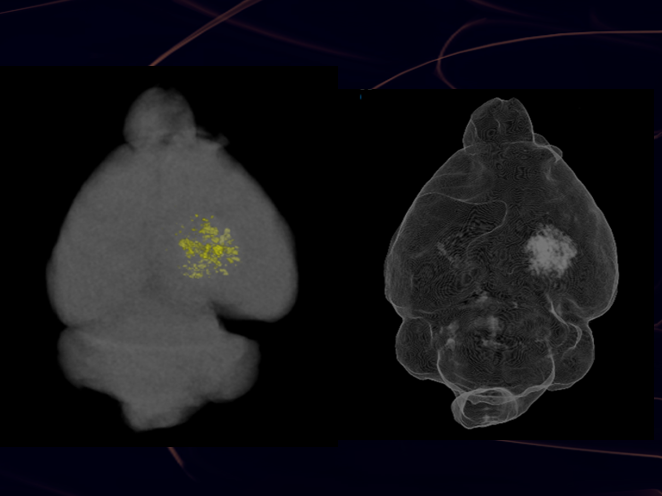

Two Therapies, One Particle, A Common Objective
Nanocarry’s AxS007 can carry multiple copies of the two gold standard antibodies – Herceptin and Perjeta – precisely as they are used today to treat metastatic breast cancer outside the brain and deliver them beyond the blood-brain barrier directly into brain metastases. Once inside, the therapy performs at a similar level of efficacy as it does outside the brain. The product has already demonstrated proof of concept in animal trials, yielding encouraging results that are attracting interest, though the road to market remains long.
“We’re progressing at a good pace, but we can’t afford to run ahead blindly,” says Dr. Revital Mandil-Levin candidly. “We don’t have the budget to waste or any room for error. Each trial is calculated down to the gram, and every decision is critical. When you only have one chance to prove it works, failure isn’t an option.”
Although Nanocarry has already demonstrated the product’s effectiveness in animal models, both in penetrating the brain and in targeting tumors, this is still only the tip of the iceberg. “Our technology is so innovative that it is almost adventurous, on the border of science fiction,” says Dr. Mandil-Levin. “While nano-based drugs already exist in the pharma world, they are far from mainstream, and there’s no technology quite like ours, carrying multiple therapies on a single nanoparticle (rather than inside it) and using insulin as the carrier. This is completely new, and we’re the first in the world to do it.”
This level of innovation comes at a cost. Each development stage requires far more work, precision, adjustments, and people with rare expertise. “With conventional drugs, you can find developers for small molecules or antibodies,” she notes. “But for nanoparticles, we’re cherry-picking talent with tweezers.”
The Nanocarry team has already completed several key studies, including extensive safety trials. At the same time, the company is contending with another challenge: producing the particles under strict regulatory conditions and a quality suitable for injection into humans.
“That itself is a challenge. Everything we do feels ten times harder because there’s simply no precedent,” says Dr. Mandil-Levin. “We constantly ask ourselves if anyone has done this before, and then we discover that we’re the first.”
In 2024, Nanocarry was accepted into the prestigious Nanotechnology Characterization Lab (NCL) Program of the U.S. National Cancer Institute, a unique initiative supporting the development of breakthrough nanotech therapies for cancer treatment.
“We’re one of only two Israeli companies ever accepted to the program,” Dr. Mandil-Levin says proudly. “The NCL lab has equipment found nowhere else in the world and a scientific team that’s helping us build our development plan ahead of clinical trials. This shouldn’t be taken for granted, especially for a small Israeli company working in such a new field. When we asked why they chose to support us, they said, ‘Because we want technologies like this to reach patients, it’s a national priority for us.’ Such responses are a source of great hope alongside a strong sense of responsibility.
The founders of Nanocarry
(From left to right: Dr. Oshra Betzer, Dr. Revital Mendil-Levin, and Prof. Rachela Popovtzer)

Just When the Door Finally Opened – It Slammed Shut
In October 2023, Nanocarry was preparing to launch a major fundraising round, with proof-of-concept, impressive preclinical results, and a clear regulatory path to the FDA, when the war broke out. The timing, as Dr. Mandil-Levin recalls, “couldn’t have been worse.” Despite the circumstances, the company successfully raised sufficient funding to move forward toward, at least, its next milestone.
“We didn’t raise everything we needed, but we raised enough to keep proving what we can do – to reach the next stage with something even more solid for the next round,” she says. “We’re being careful: every shekel counts and every decision matters. Many investors expressed interest but waited for a lead investor. To attract the big players in the field, we needed additional data – results from larger models, not just mice. However, studies like that are costly, and we haven’t yet raised the necessary resources. That’s exactly where the Israeli Innovation Authority stepped up. Without its Startup Fund, we wouldn’t be here now. It allowed us to produce the first proof of concept, reveal the technology, and demonstrate that this is possible. The Authority’s Startup Fund was exactly what we needed. When they stepped in as an investor, we knew that if we delivered the data, there would be another round.”
Nanocarry divided its fundraising into two stages. The first, in collaboration with the Startup Fund, was designed to collect the critical data needed to convince major investors. The second, planned for when results are collated and analyzed, will serve as the basis for the next major funding round. The Innovation Authority was joined by NFX, Bar-Ilan University, and a group of private investors who, together, provided the necessary impetus.
“The message to investors is clear,” says Dr. Mandil-Levin. “We may not yet have the full funding needed for human trials, but we’ve succeeded in engaging the State of Israel, top academic institutions, and leading investors, and their trust in us is powerful evidence of our potential.”
Nanocarry plans to bring its first product to market within four years, with projected sales revenues in the hundreds of millions of dollars. The company’s second product, based on the same AxS platform, will expand beyond oncology into neurological diseases.
“At the same time, new antibodies are being developed for other brain disorders,” says Dr. Mandil-Levin. “Our ultimate dream is to extend the platform to degenerative diseases, while growing here in Israel, creating more jobs, building a manufacturing chain, working closely with academia, and becoming an Israeli industrial company with real local value.”
Until then, the path ahead is filled with trials, regulatory hurdles, investor talks, and carefully measured decisions under pressure. But for the founders and their team, this is already far more than a scientific project or a business venture. It’s a long-term vision seeking not only to change how brain tumors are treated but also to create a new infrastructure for the next generation of therapeutics. This innovative technology will be able to cross the body’s most formidable barrier and open a door that others may one day walk through. For Nanocarry, this is just the beginning.
“Our mission is to empower entrepreneurs in the most challenging fields to break through real barriers – scientific, technological, and clinical. The Startup Fund gives companies like Nanocarry the initial investment that transforms a scientific dream into medical hope and tangible reality.”
Dror Bin, CEO of the Israel Innovation Authority